When the weather cools in North India, leafy greens become a more regular sight in vegetable markets and home kitchens. Bathua, sarson, methi and palak may all end up in the same shopping bag, but they do not cook in quite the same way. Knowing which leaves you have bought—and how much cleaning they need—makes …
Indian Winter Greens: How to Choose, Clean and Cook Bathua, Sarson, Methi and Palak
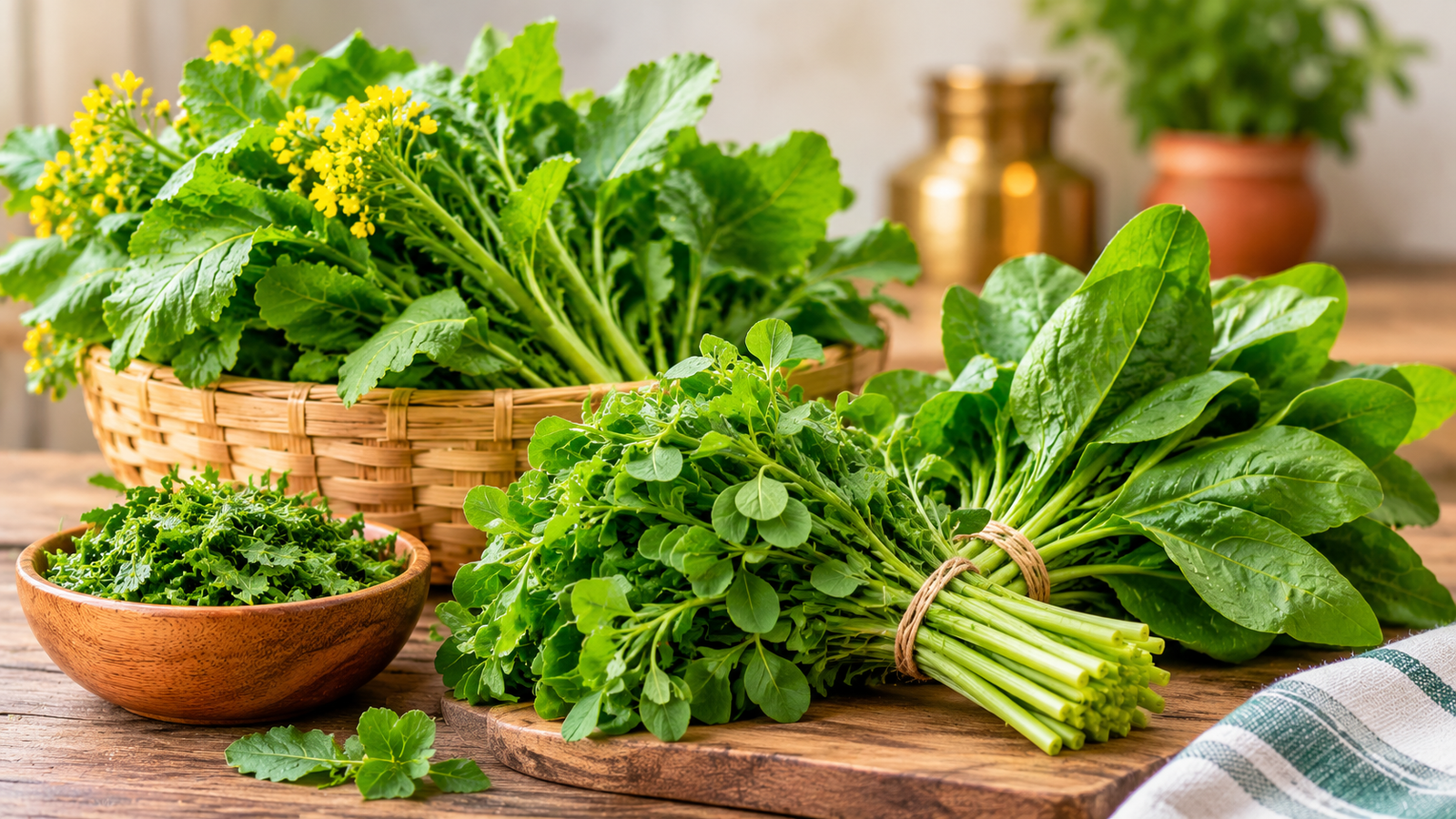
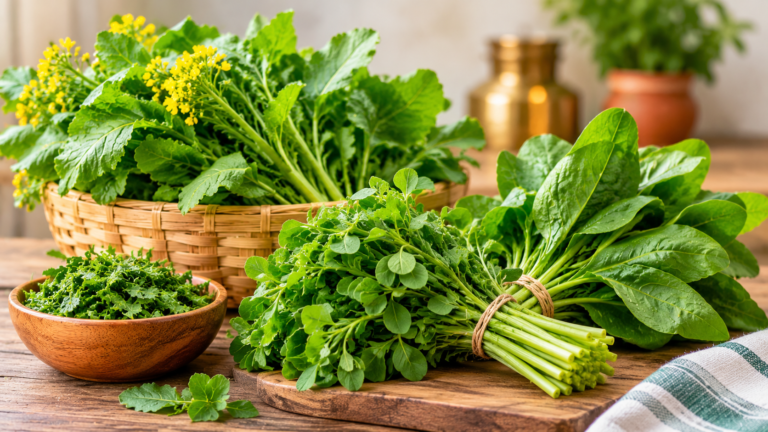
When the weather cools in North India, leafy greens become a more regular sight in vegetable markets and home kitchens. Bathua, sarson, methi and palak may all end up in the same shopping bag, but they do not cook in quite the same way. Knowing which leaves you have bought—and how much cleaning they need—makes a bigger difference than buying the largest bunch.
Bathua: the winter green to look for
Bathua is the leafy plant Chenopodium album, also known as lamb’s quarters. The Indian Council of Agricultural Research describes it as a leafy vegetable that grows in winter in North India. It is used fresh and can also be dried; the leaves can be mixed into dough for rotis or parathas. That makes bathua useful beyond the familiar bowl of bathua raita or a cooked saag. ICAR’s Indian Horticulture article on bathua also records improved cultivars developed for cultivation in Delhi and Uttar Pradesh.
At the market, look for leaves that are fresh and firm, without slimy patches or a sour smell. Bathua often arrives with fine stems and soil caught close to the base, so allow time to sort it before cooking.
Sarson, methi and palak: use each differently
Sarson (mustard leaves) has sturdier leaves and stems. It can take a longer cooking time than palak and is often cooked with other greens in saag. Remove any very tough lower stems; chop the rest so the leaves cook evenly.
Methi (fenugreek leaves) brings a more concentrated flavour. The tender stems can be used with the leaves, while thick or woody ends are better removed. Fresh methi works in parathas, thepla, dal and quick vegetable dishes. Kasuri methi is the dried leaf, so it is not a direct substitute for a bunch of fresh greens.
Palak (spinach) is softer and cooks down quickly. Add it later than tougher leaves if you are combining greens in one pot. It works in dal, saag and paneer dishes, but it is not necessarily a winter-only vegetable everywhere.
How to clean leafy greens properly
Do not rely on a quick rinse under the tap. Remove damaged leaves and separate the bunch into manageable handfuls. Swish the leaves in a large bowl of clean water, lift them out rather than pouring the water over them, and leave the grit behind at the bottom. Repeat with fresh water until it stays clear. Drain well before chopping. Bathua and other low-growing leaves may need several changes of water.
What to check when buying
- Choose leaves that look fresh and hold their shape. Avoid bunches with widespread yellowing, slime or crushed, wet patches.
- Check the stems as well as the leaves. A few older leaves are easy to remove; a bunch of limp stems is harder to salvage.
- Buy according to the dish. Methi for parathas, palak for a quick dal and a larger mix of sarson and bathua for a slow-cooked saag are different purchases.
- Start with a smaller bunch if you are trying bathua for the first time. Leafy greens reduce considerably as they cook.
Store them dry and use the delicate leaves first
Sort the greens when you get home, but wash them just before cooking if you can. Keep them chilled and dry, loosely wrapped in a clean kitchen towel or stored in a container that does not trap excess moisture. If you have already washed them, dry them thoroughly before refrigerating. Use the most delicate leaves first and discard anything that turns slimy or develops an off smell.
Seasonality depends on where you shop
“Winter greens” is a useful market phrase, not a nationwide calendar. ICAR identifies bathua with the North Indian winter, while a study of food access among the Sauria Paharia community in Jharkhand recorded bathua in the monsoon and/or winter and spinach and mustard leaves across seasons in that local setting. Availability changes with climate, cultivation and local supply. Buy what is fresh in your market rather than assuming every green has the same season across India.
The practical rule is simple: identify the leaf, clean it patiently and match its cooking time to the dish. A fresh bunch used well is more useful than a large assortment left forgotten in the fridge.
Featured photograph: Fresh leafy vegetables being sorted at a market, by Abdullah Azeez / Unsplash.