A slice of pandan chiffon cake gives you two clues to its flavour before the first bite: the green crumb and the fragrance released as it is pulled apart. Pandan is an aromatic leaf used across Southeast Asian cooking. In Singapore, it is familiar in chiffon cake, kaya and kueh, giving cooks both a fragrance …
What Is Pandan? The Fragrant Leaf Behind Singapore’s Green Cakes and Kaya
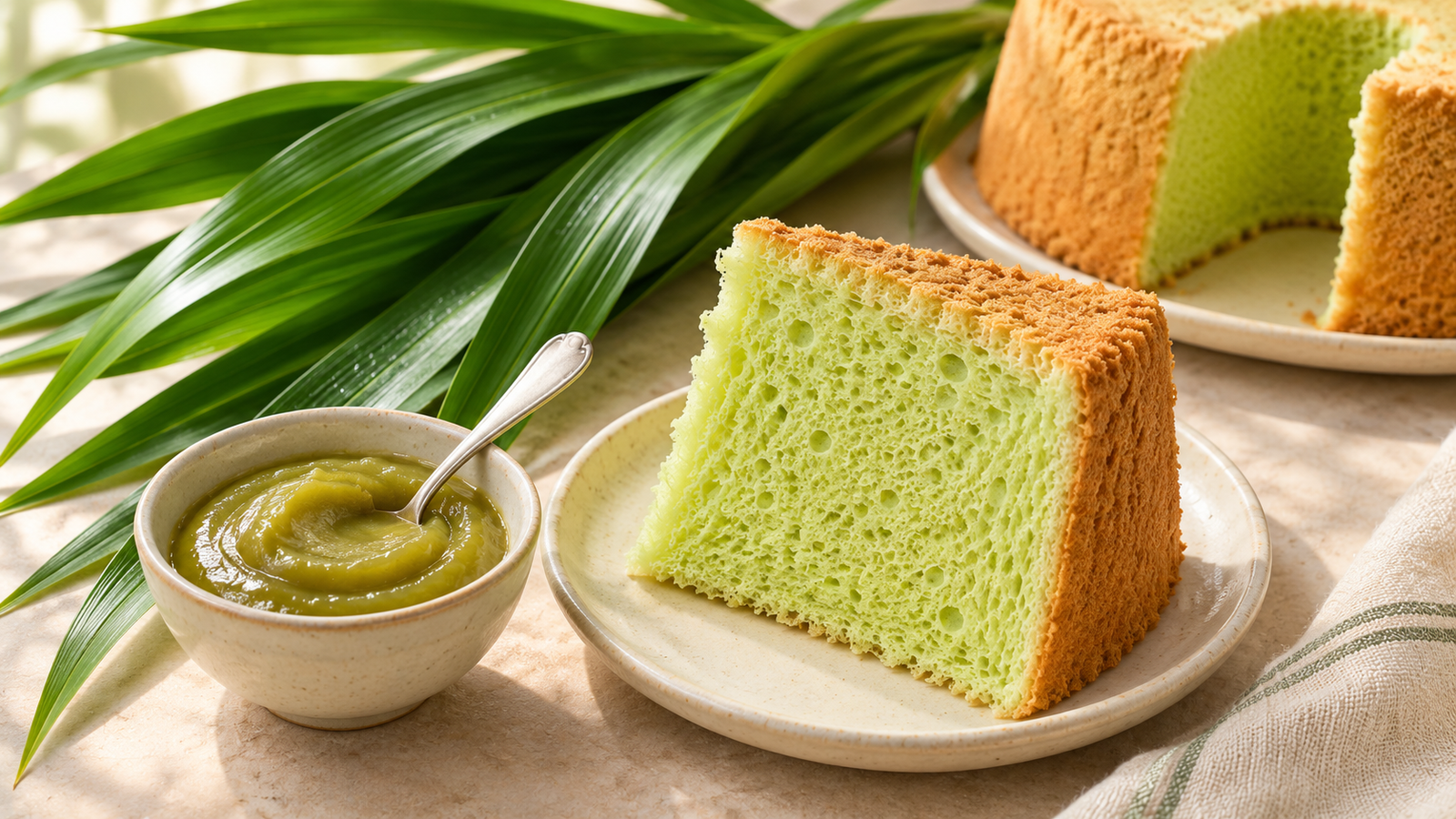
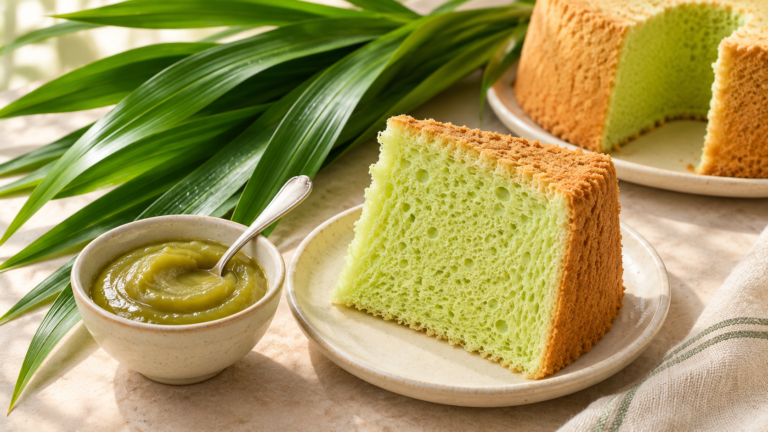
A slice of pandan chiffon cake gives you two clues to its flavour before the first bite: the green crumb and the fragrance released as it is pulled apart. Pandan is an aromatic leaf used across Southeast Asian cooking. In Singapore, it is familiar in chiffon cake, kaya and kueh, giving cooks both a fragrance and, when the leaf is blended into a mixture, colour.
What does pandan taste like?
Pandan is often compared with vanilla because its fragrance works so well in sweet foods. The comparison is a way into the ingredient, with its own leafy aroma becoming clearer when tasted in a simple preparation. Coconut milk is a frequent companion. A pandan cake, a coconut custard and pandan-scented rice each let the leaf do a different job. Michelin’s guide to pandan.
How the leaf is used changes the result. A whole leaf tied into a knot can perfume cooking rice. Chopped leaves blended with water and strained can carry flavour into a batter or dessert mixture. Straining removes the fibrous pieces and leaves the cook with a liquid that can be incorporated evenly.
Where to taste pandan in Singapore food
Pandan chiffon cake. The cake’s light crumb gives the aroma room to come through. Chef Malcolm Lee’s recipe, published by Michelin, uses pandan in a cake he describes through its moist interior and browned exterior. It is a useful first taste for someone getting to know the ingredient. Candlenut’s pandan chiffon cake.
Kaya. In the coconut-and-egg spread, pandan joins a rich, sweet base. Green pandan kaya is one familiar version. Recipes vary, and caramel or palm sugar can change the colour and flavour of another jar. Our guide to green kaya and brown kaya explains those differences in more detail.
Kueh salat. A pandan custard layer sits over glutinous rice in this Peranakan sweet. The rice and custard give each bite two textures, while coconut and pandan connect the layers. Michelin describes blending pandan leaves to produce the custard’s green colour. Michelin’s introduction to Peranakan dishes.
Pandan leaves, extract, essence and paste
Fresh leaves are a cooking ingredient. Bottled products require a look at the label. A cook’s homemade pandan extract can simply be strained liquid from blended leaves, while a commercial flavouring can combine aroma, colouring and other ingredients. “Extract,” “essence” and “paste” appear on a range of products, so the name alone gives an incomplete picture.
Bakels, for example, describes its Apito Pandan Paste as a flavouring and colouring paste and lists flavouring, colours and a thickener in the specification. That tells a baker what the product contributes. Check the ingredient list and the maker’s directions before using a bottle in a recipe written for fresh leaves. Bakels’ pandan paste specification.
It is the same useful distinction we explore in our ube versus taro guide: a familiar colour can start the conversation, and the ingredients explain what you are eating. With pandan, a piece of chiffon cake is an inviting place to begin.
Featured image: AI-generated editorial illustration for The Food Eaters.