One has a domed top and a fruit-studded interior; the other is a golden star. Here is how to choose between Italy’s two Christmas favourites.
Panettone vs Pandoro: What’s the Difference, and Which Should You Buy?
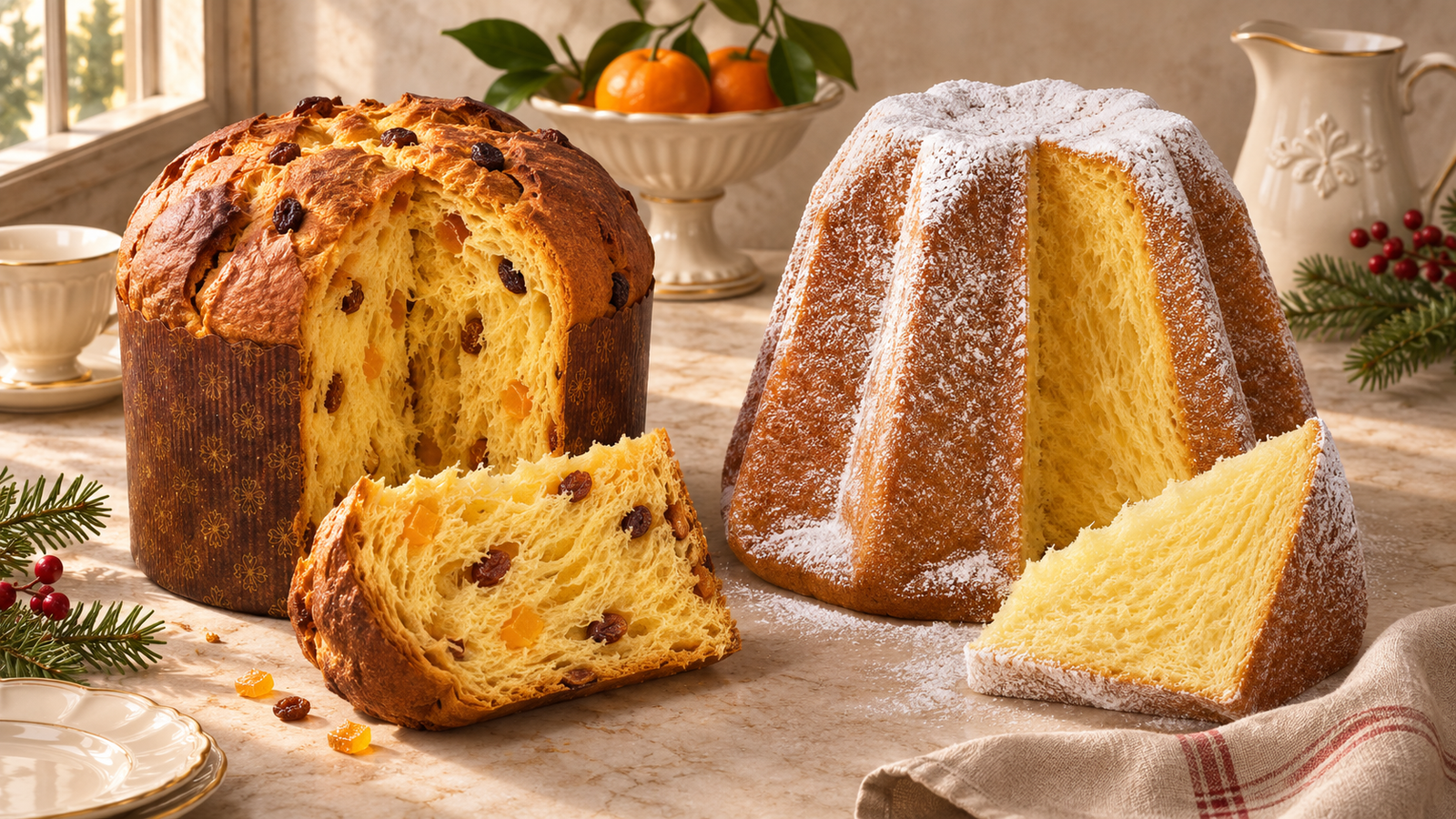
Two tall boxes stand side by side on the Christmas shelf. Inside one is a domed bake dotted with dried and candied fruit. Inside the other is a golden, star-shaped cake, usually finished with icing sugar. Panettone vs pandoro is less a contest of quality than a question of what you want in the next slice.
In their classic forms, panettone brings fruit into the dough; pandoro leaves butter and vanilla more exposed. Both belong to Italy’s Christmas table. Neither is simply the other with a different dusting of sugar.
Panettone vs pandoro at a glance
| Feature | Classic panettone | Classic pandoro |
|---|---|---|
| Shape | Cylindrical base with a domed top | Tall, eight-pointed star |
| Fruit | Typically raisins and candied citrus | Typically no fruit pieces |
| Flavour emphasis | Enriched dough, dried fruit and citrus | Butter and vanilla |
| City association | Milan | Verona |
Italy’s official tourism guide sets out these broad distinctions. Modern filled, chocolate and flavoured versions can depart from them, so use the table as a guide to the classics, then read the box.
Choose for the people eating it
If your family enjoys raisins and the slightly bitter edge of candied citrus, start with a classic panettone. If fruit pieces are the part everyone picks out, pandoro makes more sense. There is little point buying an elaborate fruit-filled centrepiece for a table that would rather eat a plain slice.
Chocolate versions offer another route, but check what has actually changed. Have chocolate chips replaced the fruit, or joined it? Is the flavour in the dough or a filling? A photograph on the front can make these differences surprisingly difficult to see.
For a first purchase, a classic version gives you a clearer introduction than a heavily filled one. After that, there is plenty of room for personal preference. Buying a traditional style once does not commit you to eating it forever.
Their histories are different, too
Panettone is associated with Milan; pandoro with Verona. The familiar story of panettone being invented by a kitchen boy called Toni is best treated as a legend, not a documented account.
Pandoro has a firmer commercial landmark. Melegatti’s company history records an industrial property certificate dated 14 October 1894 for its name, shape and recipe. That record is more useful than presenting every picturesque origin story as equally certain.
How to serve the first slice
Begin simply. Cut a modest portion and taste the bake before adding cream, chocolate sauce or another topping. With panettone, notice how the fruit sits within the dough. With pandoro, try the crumb before deciding how much icing sugar you want.
A hot drink makes an easy accompaniment. If you are serving several festive sweets, smaller portions let guests compare them without turning each slice into a full dessert. Keep any topping separate so people can choose.
Neither bake needs elaborate presentation to justify its place on the table. A clean cut and a plate that catches the loose sugar will do more for the experience than a complicated tower of additions.
What to check on the box
Look at the ingredients, weight and storage directions as well as the price. A large box can contain a smaller cake than you expect. Compare the weight of the food, not the height of the packaging.
Check eggs, milk, wheat and any nuts or fillings against your guests’ requirements. Do not assume a fruit-free cake is suitable for every allergy, or that a classic name guarantees a particular ingredient list. Ask about alcohol if avoiding it is important.
After opening, follow the maker’s instructions and close the packaging properly. Filled versions may need different handling from plain ones. Rather than applying one internet storage rule to every product, keep the label until the cake is finished.
If the fruit is what interests you most, there is another festive naming puzzle worth exploring: why Christmas plum cake often contains no plums. The Italian and Indian bakes are different, but both reward looking beyond the name on the box.
Featured image: AI-generated editorial illustration for The Food Eaters.