Can home tests really tell whether ghee is pure? Here’s what FSSAI’s iodine test can detect, what popular home tests cannot prove, and when laboratory testing is needed.




If you have ever seen a quick “ghee purity test” online, the promise is usually simple: melt it, chill it, drop it in water, watch the flame, or check the smell.
The problem is that detecting one possible adulterant is not the same as proving that a jar of ghee is pure.
FSSAI does publish a household iodine test for ghee and butter, but its purpose is narrow. It is designed to detect mashed potato, sweet potato and other starches. It does not establish whether the ghee contains undeclared vegetable fat or whether the sample meets the full regulatory standard. FSSAI DART household adulteration guide.
So what can you actually learn at home, and when does a ghee sample need proper laboratory testing?
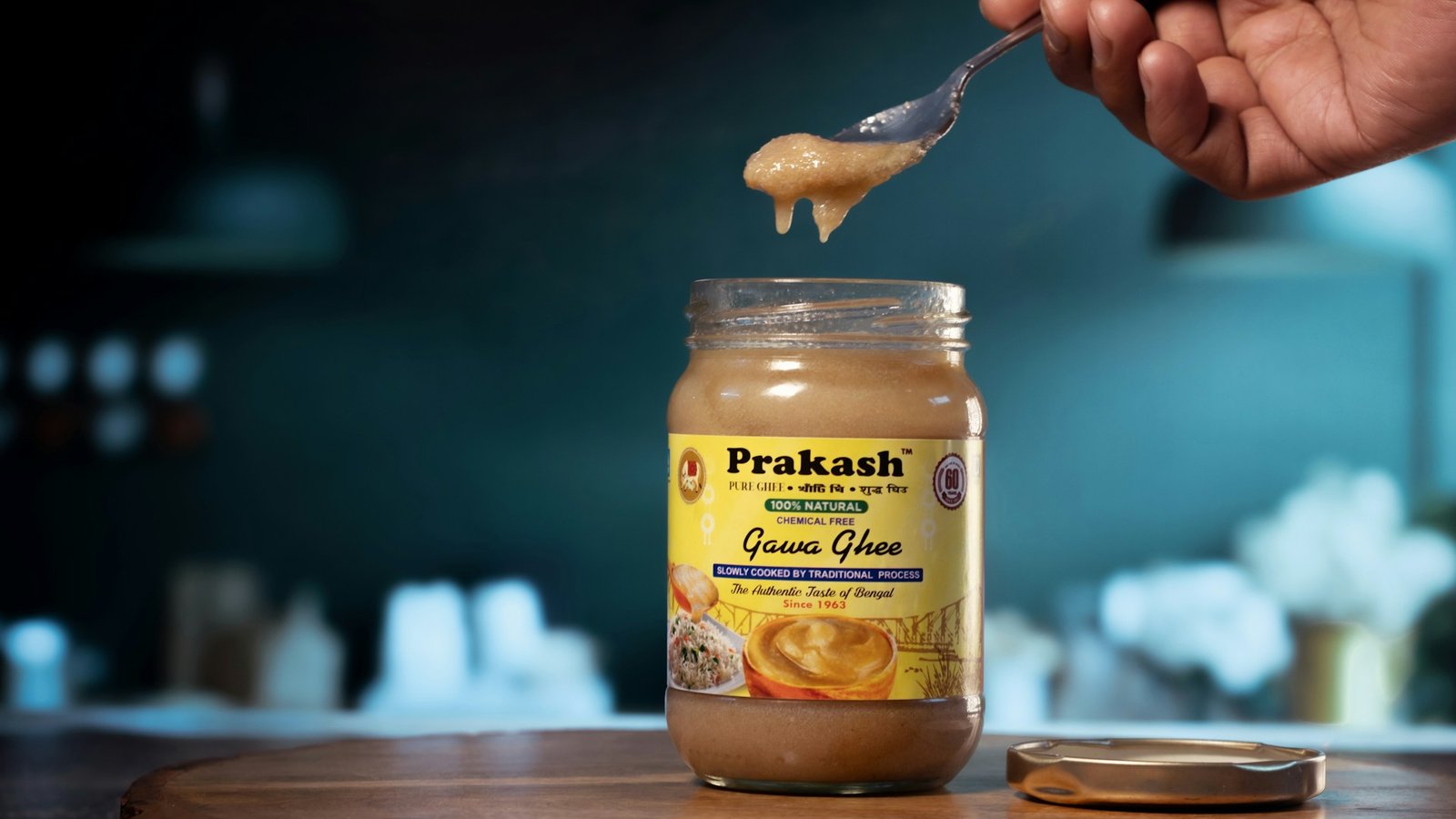
FSSAI’s dairy standards define ghee as clarified fat derived solely from milk, curd, desi (cooking) butter or cream.
The standard goes much further than appearance, aroma or texture. Ghee must contain at least 99.5% milk fat and no more than 0.5% moisture.
It also requires β-sitosterol to be absent and specifies the fatty-acid composition expected of ghee. Other analytical requirements include the butyro-refractometer reading, Reichert-Meissl value, Polenske value, iodine value and saponification value. FSSAI standards for ghee.
These are measurable compositional standards. Looking at a spoonful of ghee in a kitchen cannot establish whether all of them have been met.
FSSAI’s DART household guidance includes a test titled “Detection of mashed potatoes, sweet potatoes and other starches in ghee/butter.”
The method uses tincture of iodine. Formation of a blue colour indicates the presence of those starch-type adulterants. FSSAI DART household adulteration guide.
That is the scope of the test.
A negative result does not show that every other possible form of adulteration is absent. In particular, it does not answer the separate question of whether an undeclared vegetable fat has been mixed into the product.
Online advice often recommends placing ghee on the palm and watching how it melts, chilling it to see whether layers appear, dropping it into water, observing how it burns, or judging its smell, colour and graininess.
The FSSAI sources reviewed for this article do not validate these observations as proof that a sample of ghee is pure.
| Home test commonly suggested online | What the evidence review supports |
|---|---|
| Palm or melting test | Not validated in the FSSAI sources reviewed as proof of purity |
| Refrigerator or freezer test | Not validated in the FSSAI sources reviewed as proof of purity |
| Water test | Not validated in the FSSAI sources reviewed as proof of purity |
| Flame test | Not validated in the FSSAI sources reviewed as proof of purity |
| Smell | Not validated in the FSSAI sources reviewed as proof of purity |
| Colour | Not validated in the FSSAI sources reviewed as proof of purity |
| Graininess | Not validated in the FSSAI sources reviewed as proof of purity |
An unusual smell, colour or texture may give you a reason to question a product. That is different from identifying an adulterant or establishing regulatory compliance.
A sample should therefore not be declared pure simply because it behaves “correctly” in one or several informal tests.
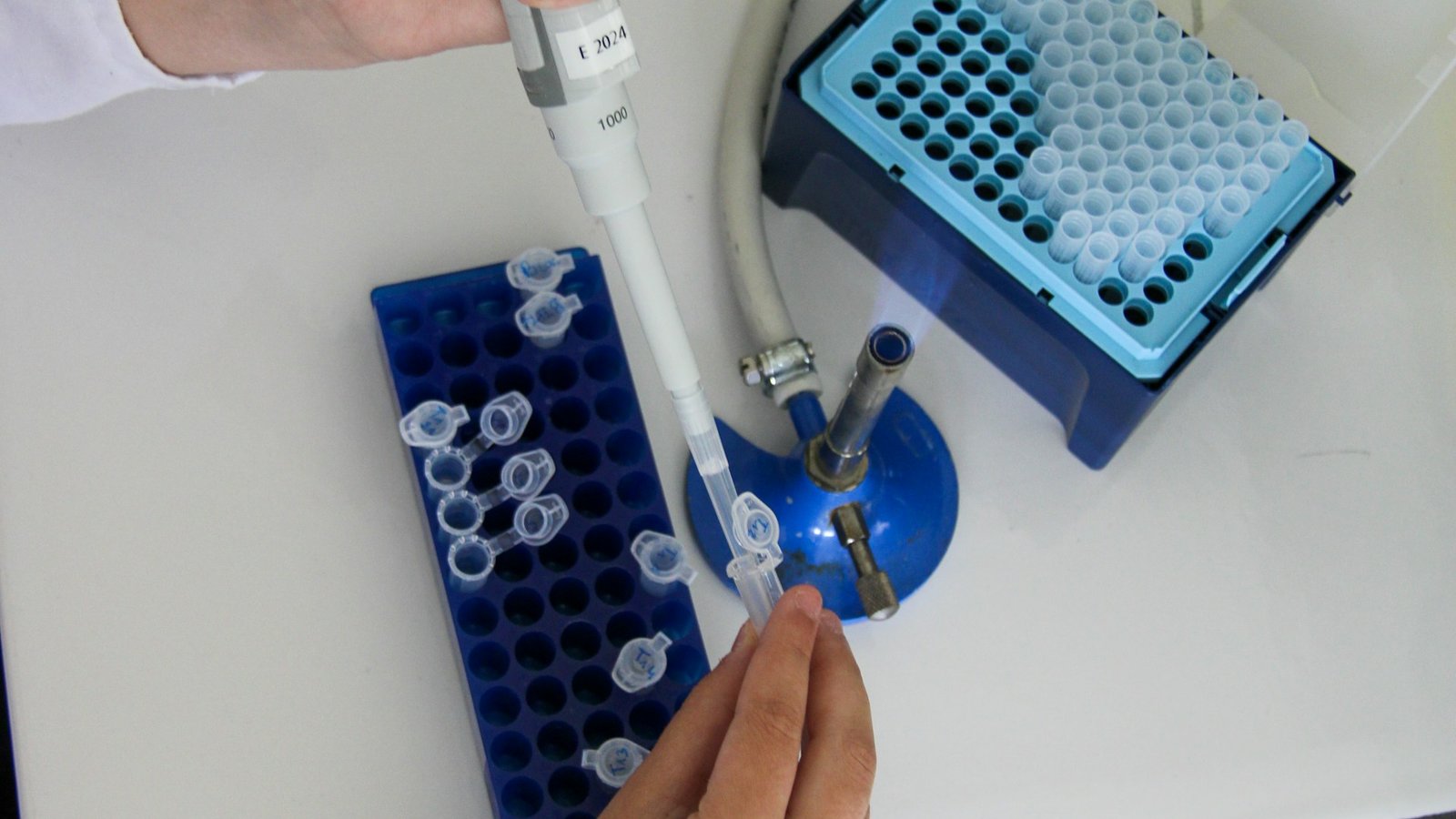
Laboratory testing approaches the problem differently because it examines measurable chemical markers and composition.
FSSAI has specified a reversed-phase high-performance liquid chromatography method, or RP-HPLC, for testing ghee for adulteration with the vegetable oils covered by that method.
The official method applies to soybean, groundnut, coconut and sunflower oils. It examines sterol markers including cholesterol and β-sitosterol. FSSAI’s RP-HPLC method uses β-sitosterol as a marker in testing ghee for adulteration with the vegetable oils covered by that method, while the ghee standard requires β-sitosterol to be absent. FSSAI RP-HPLC method for ghee.
That scope matters. The RP-HPLC method should not be described as one universal test for every possible foreign fat.
FSSAI’s dairy-testing methods also specify gas-liquid chromatography (GLC) for determining the fatty-acid composition of ghee and other milk-fat products. FSSAI Manual of Methods for Dairy and Dairy Products.
The regulatory standard sets ranges for individual fatty acids. A laboratory can measure a sample’s fatty-acid composition and compare that profile with the prescribed requirements. FSSAI standards for ghee.
This is the central difference between laboratory authentication and a viral home test: one is built around defined analytical methods and measurable criteria; the other relies on observations that may not identify what is actually in the sample.
A 2026 enforcement action offers a practical example of how laboratory findings are used by regulators.
On 21 August 2026, the Press Information Bureau reported that FSSAI had prohibited the sale of all variants of ghee manufactured, stored or sold from the authorised premises of M/s SDP Industries Private Limited in Ringanwada, Daman, until further orders. The release named brands including Shraddha, Shree Saras and Gokul. PIB: FSSAI action concerning SDP Industries.
The action followed an enforcement inspection and sampling conducted on 19 May 2026.
According to the official release, laboratory analysis of multiple ghee samples detected β-sitosterol and found non-conformity in the fatty-acid composition. FSSAI said those findings were indicative of the presence of foreign or vegetable fats.
The food business operator exercised its statutory right to appeal the initial laboratory findings. The appealed samples were sent to a Referral Food Laboratory, and reports received in August 2026 confirmed non-conformity in the tested samples. Read the official PIB release.
The same release said earlier enforcement and surveillance samples associated with the food business, including samples drawn during 2024 and January 2026, had also shown non-conformity in several parameters. It also recorded previous adjudication proceedings involving non-compliant ghee.
The Designated Officer concluded that the repeated non-compliance described in the release could not reasonably be confined to one particular batch or product. The prohibition therefore covered all ghee variants manufactured, stored or sold by that food business from its authorised premises.
What the case does demonstrate is the type of evidence regulators used: official sampling, laboratory analysis, prescribed compositional standards and referral-laboratory re-analysis.
First, do not treat a successful home test as clearance. FSSAI’s iodine test can answer a limited question about starch-type adulterants; a negative result does not rule out other forms of adulteration.
For a packaged product, keep the packaging, label and purchase bill if available. Product photographs can also be useful when submitting a complaint.
FSSAI’s Food Safety Connect grievance system allows consumers to report concerns about packaged food and advises attaching supporting material such as product images and bills. Food Safety Connect complaint guidance.
Food Safety Connect can also be used to check the authenticity of a food business’s FSSAI licence or registration. FSSAI Food Safety Connect.
If you want a sample formally tested, FSSAI says consumers can have a product tested at a notified food laboratory or report it to the Food Safety Department. FSSAI consumer guidance on food testing.
You can perform FSSAI’s iodine test for the specific starch-type adulterants it is designed to detect.
What you cannot do is turn a negative iodine result—or the outcome of a palm, fridge, water, flame, smell, colour or graininess test—into proof that the ghee is pure.
Questions about vegetable-fat adulteration require a different level of evidence. FSSAI’s regulatory framework uses laboratory methods such as sterol analysis and fatty-acid profiling to assess whether a sample conforms to the relevant standard.
The question to ask after any home test is simple:
What did this test actually detect—and what did it leave untested?