You can recognise a kulkul by its ridges. A little piece of dough is pressed against a fork or comb, rolled into a curl and fried. On a plate of Goan Christmas sweets, that crisp curl might sit next to a sticky piece of dodol or a crescent pastry filled with coconut. The assortment is …
The Goan Christmas Sweets That Travel from House to House
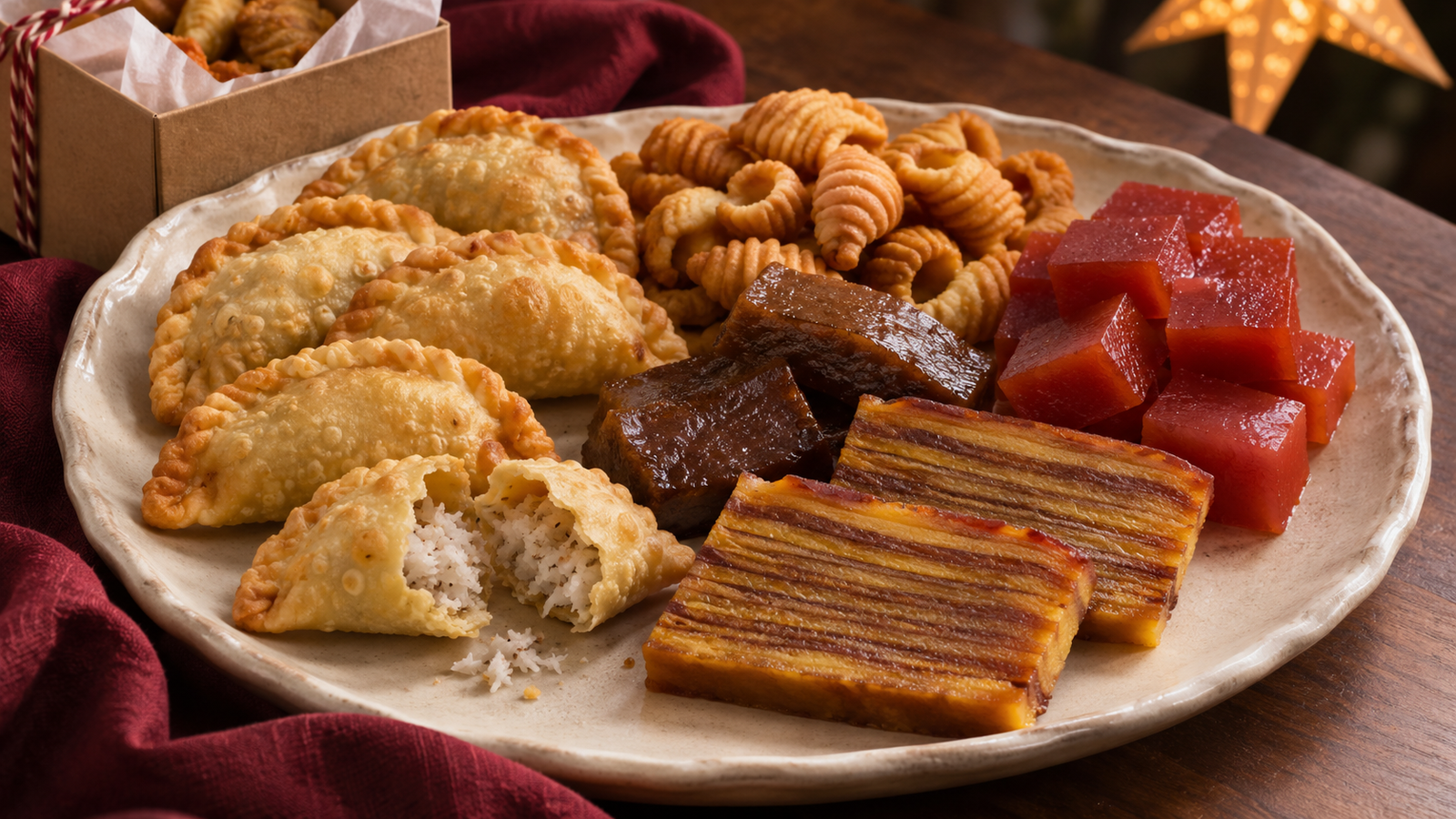
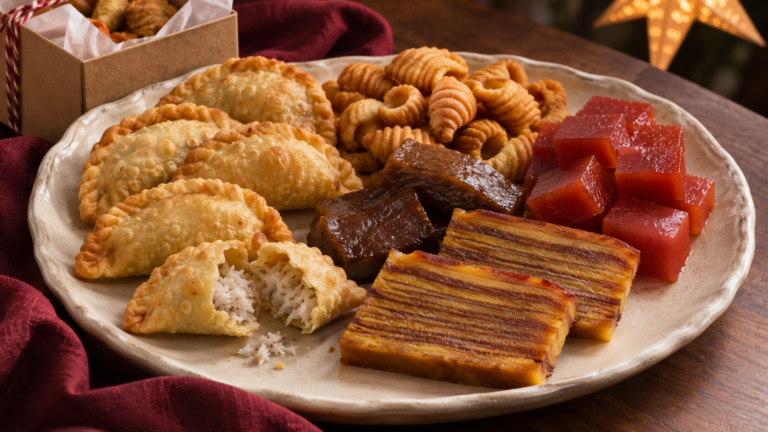
You can recognise a kulkul by its ridges. A little piece of dough is pressed against a fork or comb, rolled into a curl and fried. On a plate of Goan Christmas sweets, that crisp curl might sit next to a sticky piece of dodol or a crescent pastry filled with coconut. The assortment is called kuswar, also written kuswad, and making enough to share is part of the Christmas tradition in Goan Catholic households. Goa.me’s guide to kuswar.
What is kuswar?
Kuswar is a collection of Christmas treats that families give to neighbours, friends and relatives. The contents vary by household. A plate might hold fried sweets, baked sweets and pieces of a confection firm enough to cut. That range tells you something about the work behind it. One batch needs a fork and a frying pan, another takes repeated turns in the oven, and another calls for time at the stove.
What goes on a Goan Christmas sweets platter?
Kulkuls and neureos. Kulkuls are small fried curls, sometimes finished with a sugar glaze. Neureos, also spelled neuros, are filled pastries. One version folds grated coconut, jaggery and cardamom into a crescent before frying. In a kulkul, the shape gives the dough more ridged surface. In a neureo, the shell keeps the sweet filling tucked inside.
Dodol and bebinca. Dodol brings coconut milk, rice flour and palm jaggery together in a thick, dark confection. Stirring is central to making it. Bebinca also uses coconut milk, but its visible layers come from baking the batter a layer at a time. Both can be cut into pieces for sharing, and each gets its texture from a different kind of work.
Doce and perad. Doce is a sweet made with chana dal and coconut, commonly cut into diamonds. Perad is guava cheese, a firm fruit confection. A piece of perad brings a fruit flavour to a plate with several coconut-based sweets. Goa.me’s descriptions of the sweets.
What bakeries add to the Christmas exchange
In its December 2025 reporting, The Navhind Times spoke to Goan bakery operators about Christmas demand and changes in packaging, flavours and presentation. Some sweets are sold outside the season, while kulkuls, neureos and mixed assortments still have a strong Christmas association. A baker’s box can carry on the same exchange when a household buys some of the sweets it gives away. The Navhind Times on Goa’s Christmas sweets.
For another Goan food tradition shaped by what travels from one doorstep to the next, see our feature on the poder, Goa’s neighbourhood baker. The custom of making a festive assortment to pass around also has a parallel in Maharashtra’s Diwali faral.
Featured image: AI-generated editorial illustration for The Food Eaters.