Kanji begins with vegetables, water, salt and mustard. Given time, that simple mixture becomes a sour drink with a sharp mustard bite. In the black carrot version familiar in parts of North India, the liquid takes on a deep purple-red colour. The carrot pieces remain in the jar, ready to eat alongside a glass of …
What Is Kanji? The Black Carrot Drink with a Mustard Bite
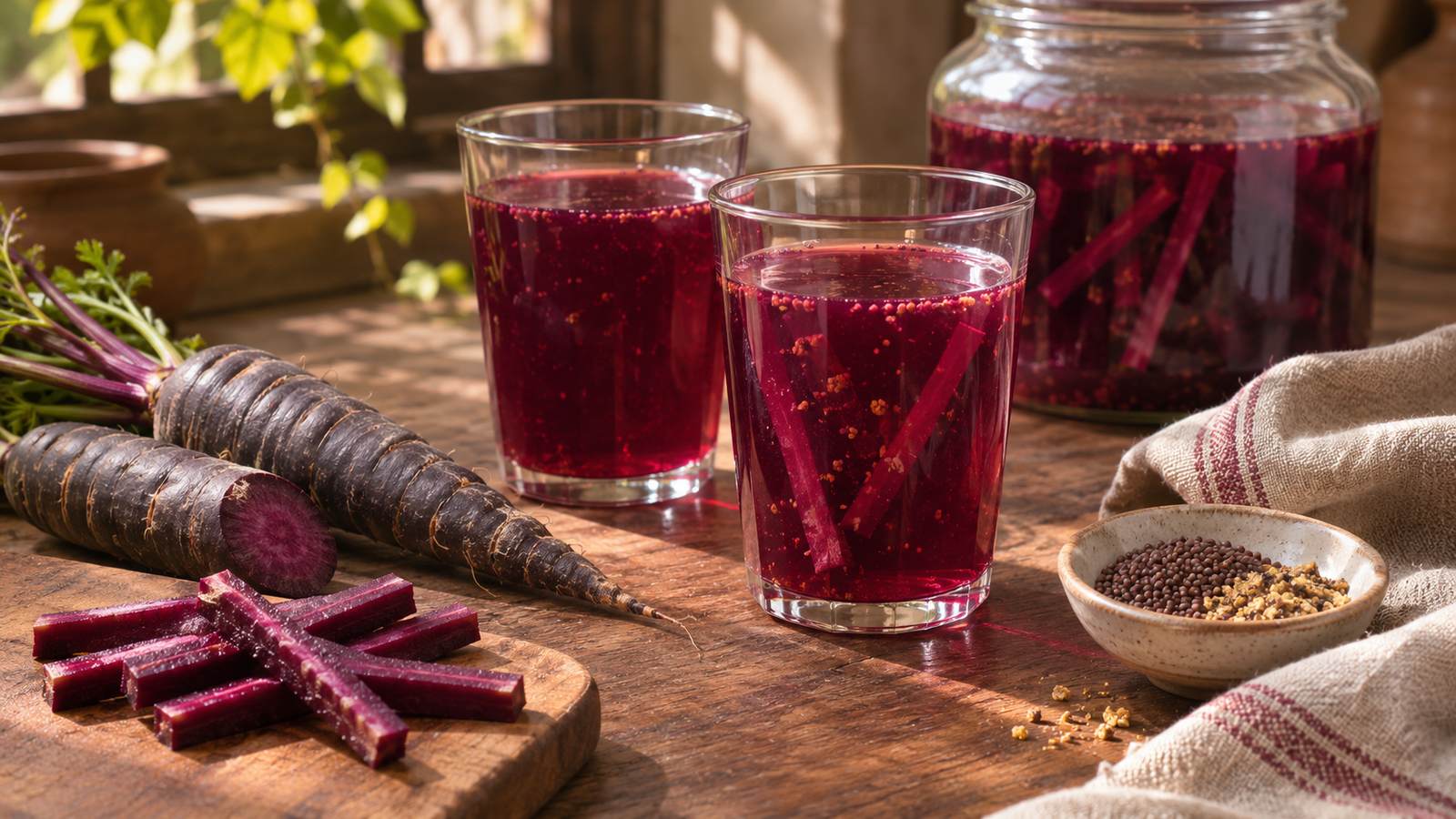
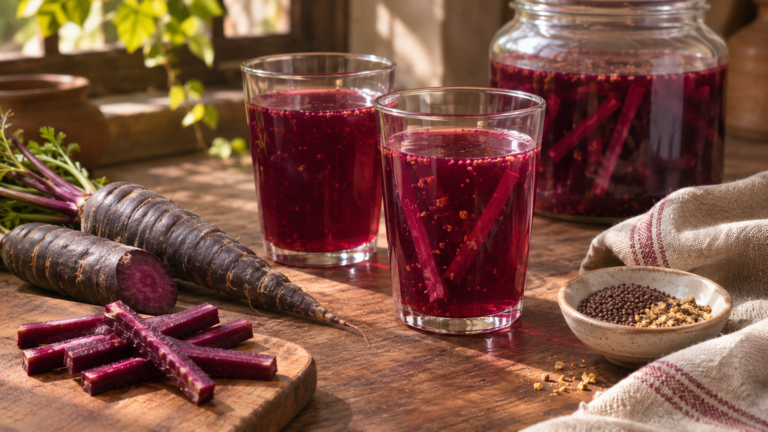
Kanji begins with vegetables, water, salt and mustard. Given time, that simple mixture becomes a sour drink with a sharp mustard bite. In the black carrot version familiar in parts of North India, the liquid takes on a deep purple-red colour. The carrot pieces remain in the jar, ready to eat alongside a glass of the drink.
The Food and Agriculture Organization’s account of fermented vegetables describes kanji made with deep-purple carrots, salt, crushed mustard seed and chilli. The ingredient list is a useful starting point for understanding a drink whose appeal comes from sourness, spice and the changes that happen in the jar. FAO’s account of kanji and vegetable fermentation.
What does kanji taste like?
The two most noticeable features are its tang and mustard heat. Mustard brings a pungent edge, while fermentation develops the sourness. Carrots contribute vegetable flavour and colour. Salt and any additional chilli or spices affect the balance, so two household batches can taste different even when both are called kanji.
In a family account published by Down To Earth, Lineysha Jain describes jars of black carrots and mustard seeds prepared when the seasonal carrots arrived. Her account recalls the liquid becoming tangy and lightly fizzy over several days. Those details describe a particular household tradition, including the anticipation that came with waiting for the batch. Jain’s account of black carrots and kanji.
Why are black carrots used?
The dark carrots give this version its distinctive colour. They also connect the drink to the cooler part of the year, when households can find them in local markets. Recipes using red carrots, beetroot or a mixture offer other routes to the drink. If you are buying a bottled kanji or ordering it somewhere, asking which vegetables went into it tells you more than judging the colour alone.
That seasonal ingredient connection runs through several regional foods. In Surat, young sorghum is eaten as ponk while the grains are still tender. In northern kitchens, the arrival of bathua, sarson and methi changes what is cooked with the next meal.
What happens during fermentation?
Kanji is an example of lactic acid fermentation. Research on carrot and beetroot kanji has examined its acidity and lactic acid bacteria as the drink develops. The process helps explain its sourness. The time a household batch takes can vary with temperature, ingredients and preparation. A published preparation provides a starting method, while a casual promise that every jar will be ready on the same day misses those differences. Research on lactic acid bacteria in kanji.
How is kanji served?
A small glass can accompany a meal, with the fermented carrot pieces eaten too. Its acidity and mustard give it a very different drinking character from a sweet carrot juice. To understand a particular batch, pay attention to the balance of sourness and spice as well as the vegetables used.
Kanji also belongs to the wider Indian vocabulary of drinks built around acid, salt and spice. Our feature on India’s changing zero-proof menus explores how those qualities give drink makers more ways to build flavour.
Featured image: AI-generated editorial illustration for The Food Eaters.