Start with a few grains before adding the sev. Ponk is young jowar, or sorghum, harvested while the kernels are still green and tender. Lightly roasted, the small grains are soft and mildly sweet. The sev adds crunch, and a dab of green garlic chutney brings the bite. In Surat, that combination makes a bowl …
What Is Ponk? The Tender Green Grain That Makes Surat’s Winter Special
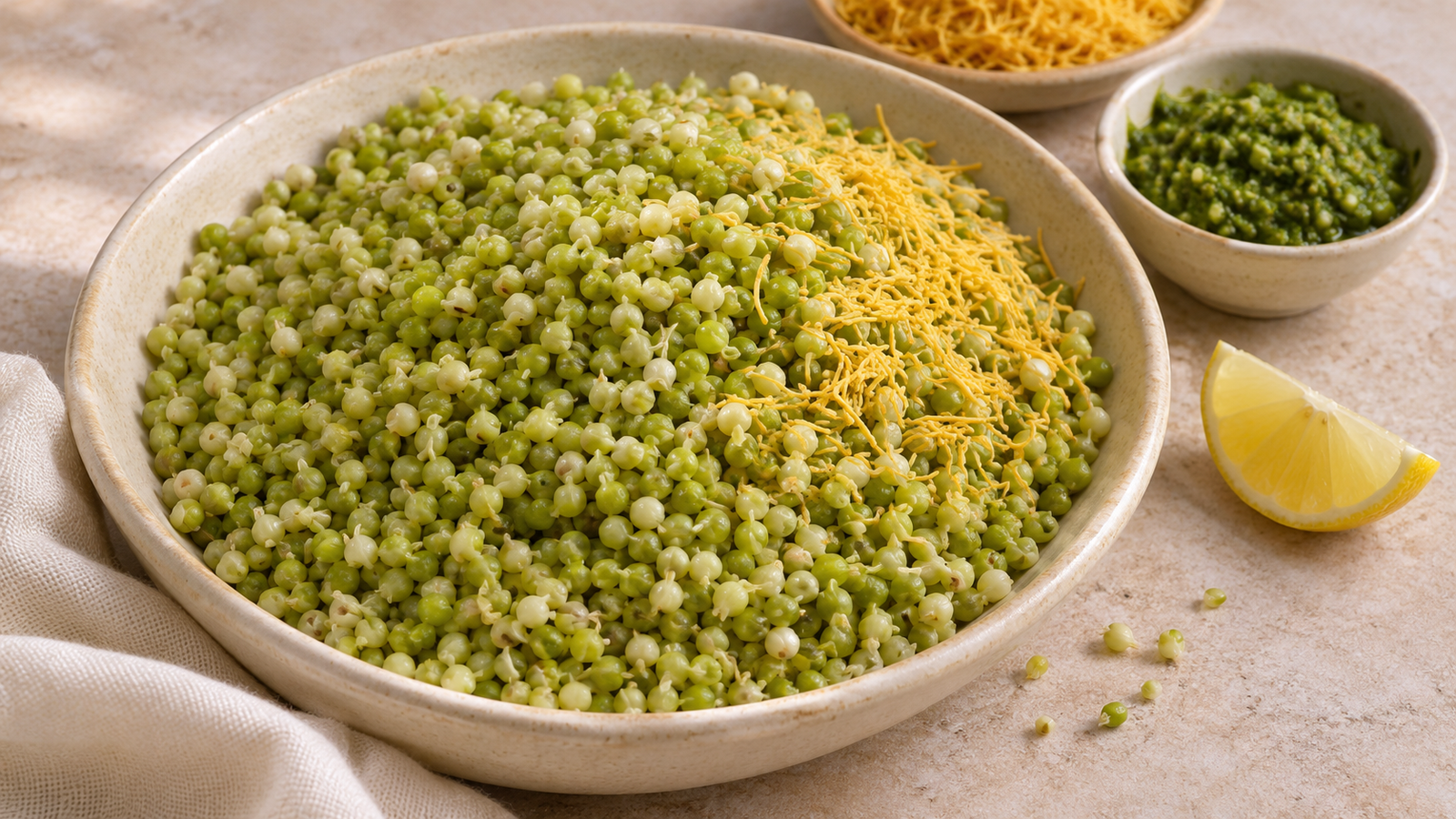
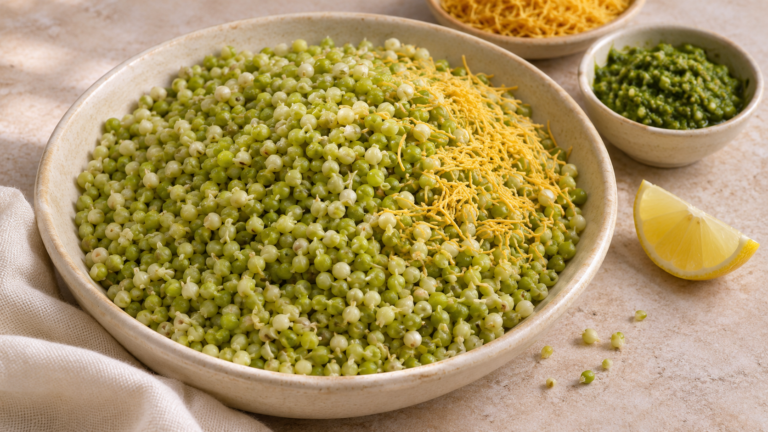
Start with a few grains before adding the sev. Ponk is young jowar, or sorghum, harvested while the kernels are still green and tender. Lightly roasted, the small grains are soft and mildly sweet. The sev adds crunch, and a dab of green garlic chutney brings the bite. In Surat, that combination makes a bowl of grain an afternoon snack. Scroll’s account of winter ponk and Condé Nast Traveller India’s Surat food guide document those preparations.
What is ponk, and how is it different from dried jowar?
Ponk and dried jowar come from sorghum. What changes is the stage at which the grain is harvested and how it is handled. Ponk is gathered before the kernels harden. Dried jowar is mature grain, the kind you might buy whole for the pantry or ground into flour for bhakri. Ponk gives way when you bite into it and can be eaten by the handful after a light roast.
The harvest stage also explains why the term can mean two things at a counter. Ponk can refer to the young grain itself or the snack made from it. If you want to taste the grain on its own first, ask for a little plain before it goes into the mix.
Three ways to eat ponk in Surat
With sev. A handful of crisp gram-flour strands gives the soft grain some texture. Condé Nast Traveller India describes a version tossed with lemon-and-pepper sev and sugar crystals. The sweet grains, pepper and crisp sev are all discernible in the same mouthful.
With green garlic chutney. Surat native Sweta Merchant recalls eating ponk with chutney made from leelu lasan, or green garlic, and following it with chaas. The fresh garlic adds a savoury bite while the tender sorghum remains the centre of the snack.
As ponk vadas. The immature grains can also go into fried fritters. A vada gives you a browned exterior and pockets of grain inside. If you’re curious about the texture of ponk itself, try the loose grains first and the fritters second.
Why ponk belongs to winter
Surat food guides put ponk in the cooler months, with December and January often cited as the peak. A November visit can put you near the beginning of the usual window. Ask what has arrived that day before making a special trip. The short season is tied to the point at which the kernels are still tender. Once the grain matures, it has a different use in the kitchen. Surat seasonal food guide.
For another look at what the season brings to Indian kitchens, read our guide to choosing and cooking winter greens.
Featured image: AI-generated editorial illustration for The Food Eaters.