Put green kaya and brown kaya on two pieces of toast and the difference you’re looking for is as much about aroma as colour. Pandan can lend the green spread a fragrant, leafy note. In brown kaya, the sweetness can have the depth of caramel or palm sugar. Both start with coconut, eggs and sugar …
Why Is Kaya Green or Brown? Inside Singapore’s Favourite Toast Spread
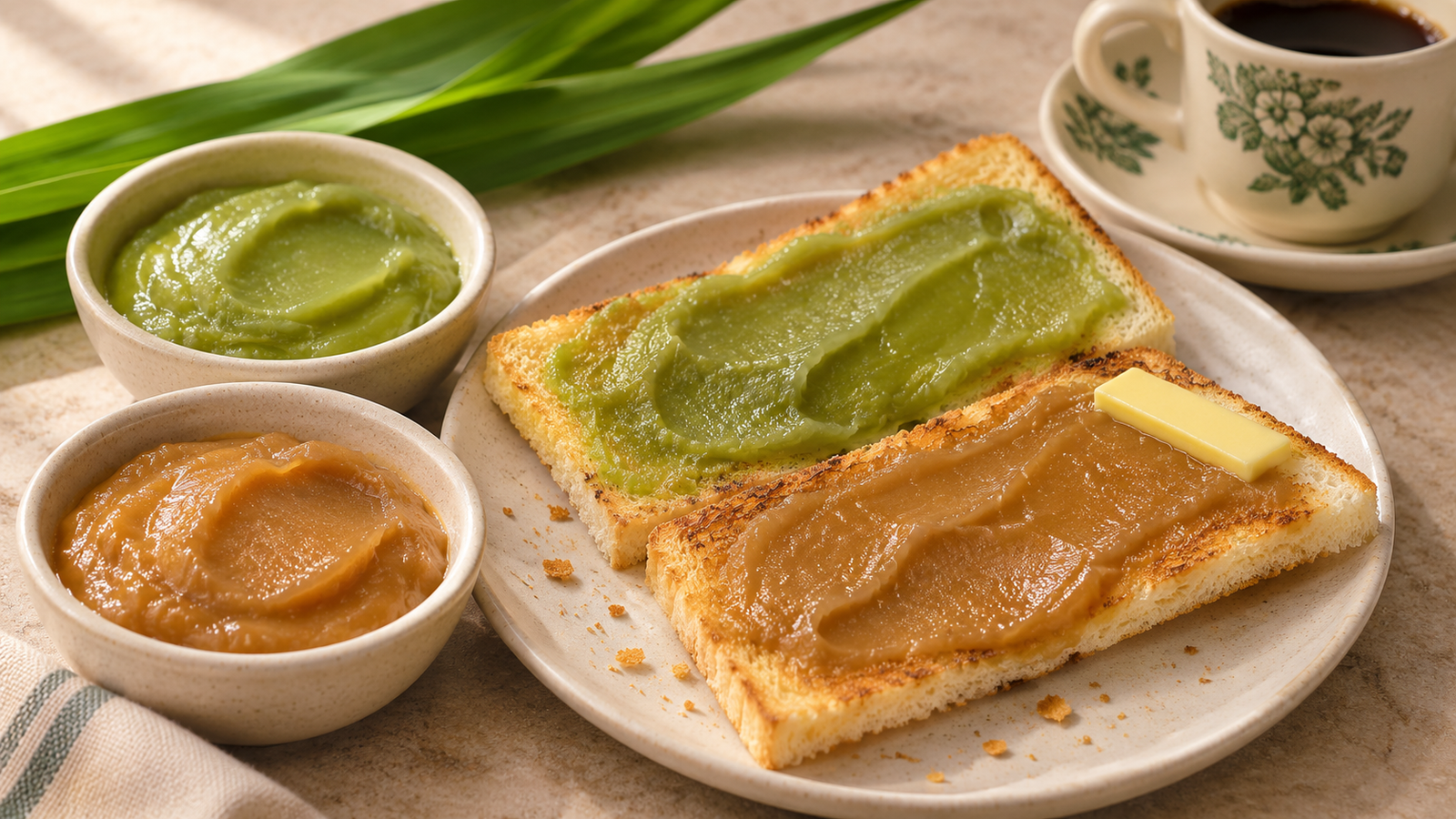
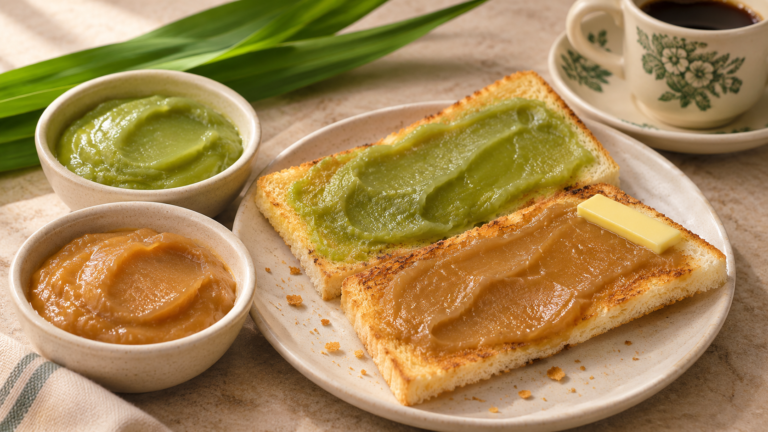
Put green kaya and brown kaya on two pieces of toast and the difference you’re looking for is as much about aroma as colour. Pandan can lend the green spread a fragrant, leafy note. In brown kaya, the sweetness can have the depth of caramel or palm sugar. Both start with coconut, eggs and sugar cooked into a spread. The Michelin Guide’s interview with Singapore chef LG Han.
Green kaya vs brown kaya
Singapore’s National Heritage Board associates green kaya with Peranakan-style recipes that use pandan leaves. It describes Hainanese-style kaya as brown-tinged from caramelised sugar. Han, the chef behind Labyrinth, describes a brown version made with gula melaka, or palm sugar. That distinction matters when you’re shopping. One maker can caramelise sugar, while another can start with a darker sugar. Pandan can appear in recipes of either colour. National Heritage Board’s account of kaya and kopi.
Colour tells you how the spread looks on the toast. The recipe determines how strongly it smells of pandan, how much coconut comes through and how far the flavour runs towards caramel. The coconut and eggs also give kaya a custard-like body. Han describes careful heat control as important to the result. A smooth, thick kaya spreads easily across toast without immediately soaking into it.
Why kaya toast comes with butter, eggs and kopi
In a Singapore kopitiam, kaya toast is commonly served with cold butter tucked into crisp toast, soft-boiled eggs on the side and kopi, or local coffee. The toast supplies the crunch and the butter adds a cool, rich layer before it softens. The eggs can be seasoned with dark soy sauce and white pepper, giving the sweet toast a savoury companion. Some diners dip a corner into the eggs. Michelin’s guide to the Singapore breakfast set.
What to check on a jar of kaya
Read the ingredients for pandan leaf or extract, pandan flavouring, caramel or palm sugar, depending on what you want to taste. Singapore’s published kaya specification distinguishes flavourings from permitted colourings. The ingredient list gives you more information than the shade of green in the jar. Kaya traditionally contains egg, so check the allergen declaration if you’re buying for someone who avoids it. Singapore Standard SS 466.
If you can compare both styles, use the same toast and butter for each. Try a small taste of the kaya first, then a bite with the butter. Pandan may be the first thing you notice in one, with caramel or palm sugar coming through in the other. For another Singapore food tradition that makes more sense once you taste its components separately, see our guide to Indian rojak and its dipping sauce.
Featured image: AI-generated editorial illustration for The Food Eaters.