Influencers can make a restaurant visible overnight, while critics may provide deeper context. Reliability depends less on the label and more on how the recommendation was produced.





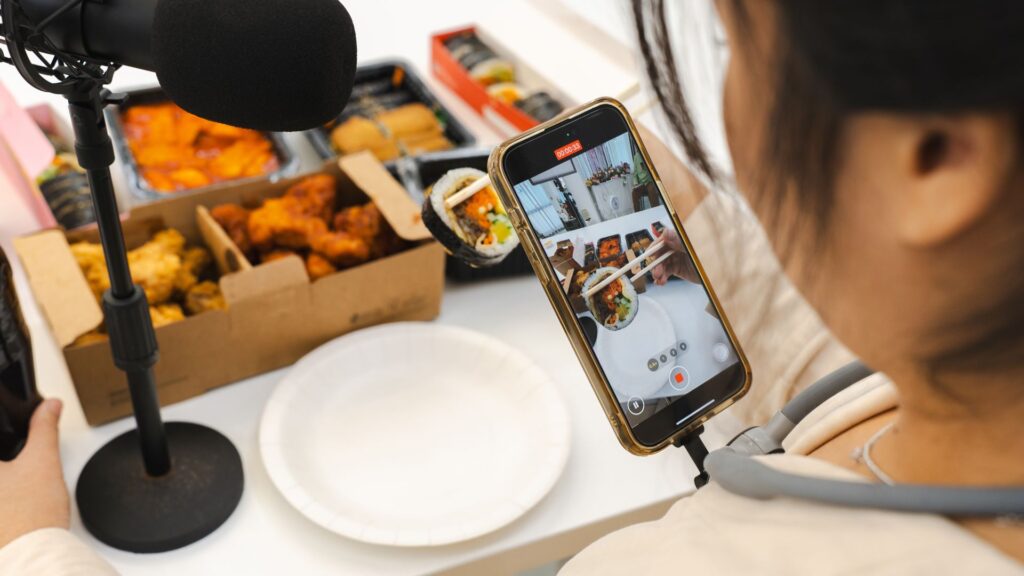
Influencers can make a restaurant visible overnight, while critics may provide deeper context. Reliability depends less on the label and more on how the recommendation was produced.
A restaurant recommendation once reached many diners through a newspaper review, magazine column or guidebook.
Today it can travel nationally in a short video before a traditional critic has even booked a table.
That shift has widened food coverage.
A small restaurant, neighbourhood café or street-food vendor can reach an audience without waiting for conventional food media to notice it.
It has also made one question harder to answer:
When someone says a restaurant is worth visiting, are they reviewing it, recommending it, advertising it—or doing several of those things at once?
Food creators are particularly good at speed and visual discovery.
A short video can show the dining room, portions, menu and presentation in seconds.
Professional criticism usually works differently. Longer reviews can create room for context: cooking technique, service, consistency, pricing, comparison with similar restaurants and an explanation of how the writer reached a judgement.
Neither format guarantees reliability.
A beautifully written review can still be subjective.
A 30-second video can still contain accurate and genuinely useful information.
The question is not whether the person is called an influencer or a critic.
It is what evidence and incentives sit behind the recommendation.
Research from North India shows why this matters.
A peer-reviewed study collected data from 389 street-food consumers in Jammu, Chandigarh and Delhi and examined the relationship between food-vlogger credibility, information quality, consumer attitudes and purchase intentions.
The researchers found that credibility and information quality influenced consumer attitudes and intentions toward street-food consumption. The study was published in the International Journal of Social Economics.
The study does not establish that vloggers are more trustworthy than critics.
It demonstrates that audiences’ perception of credibility can influence behaviour.
The clearest distinction a diner should be able to make is whether a commercial relationship exists.
Under the Advertising Standards Council of India’s Influencer Advertising Guidelines, influencer advertising requires a clear disclosure when there is a material connection with the advertiser.
ASCI explicitly says that a material connection is not limited to cash payments. Free or discounted products, services or other benefits can also trigger disclosure requirements.
That does not mean a complimentary restaurant meal automatically makes every opinion false.
It means the audience should know the context before deciding how much weight to give the recommendation.
ASCI’s most recent annual complaints data provides useful context, but it needs careful interpretation.
For 2025–26, ASCI reported processing 1,609 influencer advertisements; 97.3% of those processed ads required modification. Food and beverage represented 6.3% of the influencer-violation categories listed in the report. ASCI’s 2025–26 Annual Complaints Report provides the figures.
Those numbers refer to advertisements that entered ASCI’s complaints and monitoring system.
They do not mean 97.3% of all influencer posts in India are non-compliant.
That distinction is essential.
An audience of one million people proves that a creator has reach.
It does not prove culinary expertise, independence or factual accuracy.
The same principle applies to critics.
A newspaper masthead or job title does not automatically make every judgement correct.
A useful restaurant recommendation normally contains information that allows the audience to understand how the conclusion was reached.
What was ordered?
What did it cost?
What specifically worked?
Was the meal paid for?
Was the visit invited?
Has the reviewer distinguished factual information from personal judgement?
Specificity is more informative than enthusiasm.
“Crisp dosa with a fermented tang and a soft potato filling” gives a diner something to evaluate.
“Best dosa ever, 10/10, must visit” mostly communicates excitement.
A creator does not need a culinary degree to say they enjoyed a plate of food.
But expertise becomes more relevant when the claim becomes technical.
Statements about authenticity, culinary history, nutrition, food safety or specialist cooking methods require more knowledge and verification than simply saying a dish tasted good.
The same applies to professional critics.
The more authoritative the claim sounds, the stronger the evidence should be.
Food criticism no longer controls restaurant discovery in the way traditional media once did.
That can be beneficial.
More voices can mean more coverage of regional restaurants, street food, independent businesses and communities that conventional publications historically overlooked.
At the same time, abundance creates another problem.
When thousands of recommendations compete for attention, context and disclosure become more valuable, not less.
A critic’s strongest contribution may therefore be depth and accountability rather than being first.
Influencers can provide those qualities too.
The distinction increasingly depends on standards rather than platform.
Before acting on a restaurant recommendation, a diner can ask a few straightforward questions.
Is any commercial relationship clearly disclosed?
Does the reviewer explain what they actually ate?
Are facts separated from opinions?
Are prices, opening details and other practical information current?
Does the reviewer ever criticise places, or does every visit become a glowing recommendation?
When making technical or historical claims, is there evidence?
None of these questions requires deciding that influencers are good and critics are bad—or the other way around.
They simply make the recommendation easier to evaluate.
Social media has made food culture more open, visual and immediate.
Traditional criticism can still add depth, comparison and context.
Diners benefit from having both.
The most useful question is therefore not, “Should I trust influencers or critics?”
It is:
What has this particular reviewer given me reason to trust?
That standard also underpins editorial selections such as 25 Restaurants Shaping India’s Dining Scene in 2026, where scope and methodology matter more than pretending any list is universally objective.

Can home tests really tell whether ghee is pure? Here’s what FSSAI’s iodine test can detect, what popular home tests cannot prove, and when laboratory testing is needed.
High-protein snacks, drinks and desserts are everywhere, but extra protein does not automatically make a product healthier. Here is what matters beyond the front-of-pack claim.
Whether it’s a timeless classic or an innovative signature creation, these cocktail bars are redefining India’s drinking culture—one perfectly crafted glass at a time.
“A good café tells you something about the city it’s in — sometimes through decades of history, sometimes through a single unforgettable view.”