Plant-Based Cooking in India Is Moving Beyond Meat Substitutes
India’s plant-based cooking spans familiar ingredients, vegan menus and a small alternatives market. What current research and restaurant examples show.
00:00
00:00
India has long had meals built around grains, legumes and vegetables. The newer commercial plant-based category is a different story: companies are making alternatives to dairy, meat and eggs, while restaurants are putting plant-focused cooking at the centre of a menu. Both developments matter, but neither should be confused with a claim that India has suddenly become vegan.
The terms need care. Vegetarian food excludes meat and fish, but may contain dairy, honey or eggs depending on how a menu uses the label. Vegan food excludes animal-derived ingredients. Plant-forward describes a meal or menu that gives plants a larger role without necessarily excluding animal products. Plant-based is used more loosely in food marketing; on an individual packaged product, the ingredient list is more useful than the front label for checking whether it is vegan.
The commercial category is measurable, though still small. An Ipsos study commissioned by the Plant Based Foods Industry Association estimated India’s market for the plant-based alternatives in its defined scope at ₹300 crore in 2024, less than 0.1% of the conventional dairy and meat market it used for comparison. Its definition includes dairy and meat alternatives and excludes soya chunks and soya chaap. It therefore cannot be read as the value of all vegetarian cooking in India. The report found plant-based dairy to be the larger segment.
A separate GFI India and Kantar study documents a wider assortment of alternatives in urban retail and online channels, including kebabs, nuggets, patties and dairy substitutes. Availability is not the same as widespread adoption. GFI’s industry overview notes barriers around price, familiarity, texture and how dairy alternatives work in everyday uses such as tea and curd. Its product and restaurant counts describe research through April 2023, so they should not be passed off as a 2026 inventory.
Restaurants show another route. Greenr describes its kitchens as serving vegan and vegetarian food and calls its approach plant-forward. That combination is more precise than treating every dish at a plant-focused restaurant as vegan. A diner with a strict dietary requirement should still check the current menu and ingredients. The restaurant’s site lists locations in Delhi, Gurugram, Mumbai and Goa; those listings establish a contemporary example, not the size of the national market.
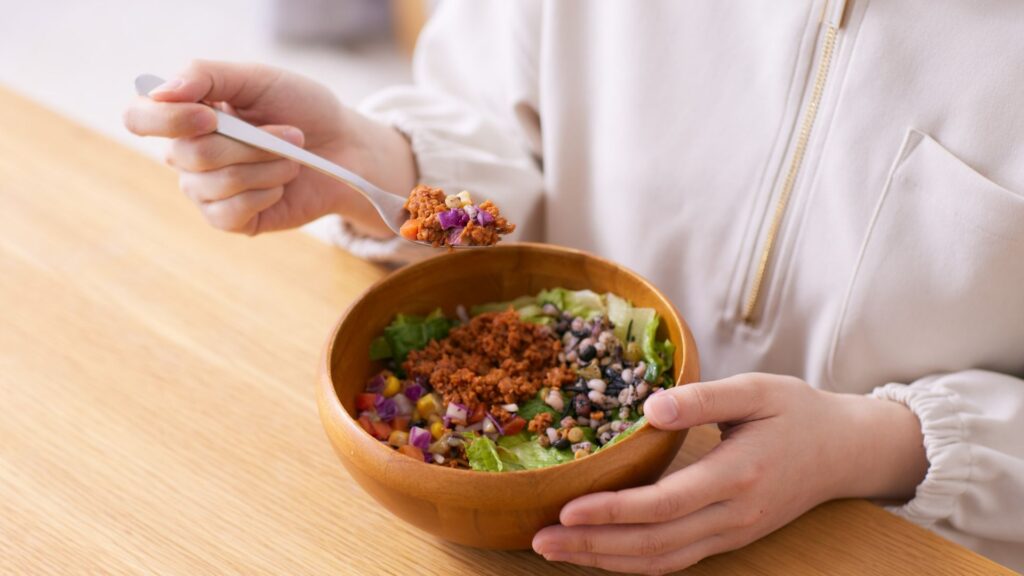
The most interesting development may be a broader set of choices. A cook can build a satisfying dish around beans, lentils, vegetables or grains; another can use a formulated meat alternative. These are different products and culinary decisions. Nutrition depends on the complete dish and the person’s needs. Environmental effects require a defined comparison, production method and supply chain. Neither benefit follows automatically from a plant-based label.
India’s plant-based story, then, has two scales: established cooking traditions and a growing but comparatively small alternatives business. The editorial test is whether a dish works as food and whether the label tells diners what is actually in it.
Details confirmed as of September 2026. Always check current hours, menus and reservation policies before visiting.
Dishani Som
I’m the Chief Editor of The Food Eaters, a publication built around restaurants, food culture and travel. I focus on the places, people and trends worth knowing — with thoughtful, well-researched stories from India and beyond.
Can home tests really tell whether ghee is pure? Here’s what FSSAI’s iodine test can detect, what popular home tests cannot prove, and when laboratory testing is needed.
High-protein snacks, drinks and desserts are everywhere, but extra protein does not automatically make a product healthier. Here is what matters beyond the front-of-pack claim.
Whether it’s a timeless classic or an innovative signature creation, these cocktail bars are redefining India’s drinking culture—one perfectly crafted glass at a time.