Plan your turkey thawing around its weight and cooking day, with refrigerator timings and a safe cold-water backup.



Plan your turkey thawing around its weight and cooking day, with refrigerator timings and a safe cold-water backup.
A frozen turkey creates a deadline before the oven ever goes on. Buying it is one job; giving it enough time to thaw is another. A large bird can need almost a week in the refrigerator, so leaving that decision until the night before dinner can unravel an otherwise carefully planned menu.
For anyone wondering when to thaw a Thanksgiving turkey, start with two details: its weight and the day you intend to cook it. In the United States, Thanksgiving falls on Thursday, November 26, in 2026. Your thawing schedule should work backward from cooking time—not from when guests arrive.
FoodSafety.gov’s thawing chart allows approximately 24 hours for every four to five pounds of turkey, with the refrigerator set to 40°F (4°C) or colder.
| Turkey weight | Approximate refrigerator thawing time |
|---|---|
| 4–12 pounds | 1–3 days |
| 12–16 pounds | 3–4 days |
| 16–20 pounds | 4–5 days |
| 20–24 pounds | 5–6 days |
These are planning ranges, not a guarantee that every bird will be ready at the same hour. Use the upper end when setting your reminder rather than building a schedule with no room to spare.
For example, if you plan to cook a 14-pound turkey on Thursday morning, moving it to the refrigerator on Sunday morning allows four full days. For Thanksgiving 2026, that means November 22. This is a worked example based on the chart, not a separate government deadline.
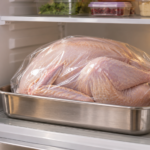
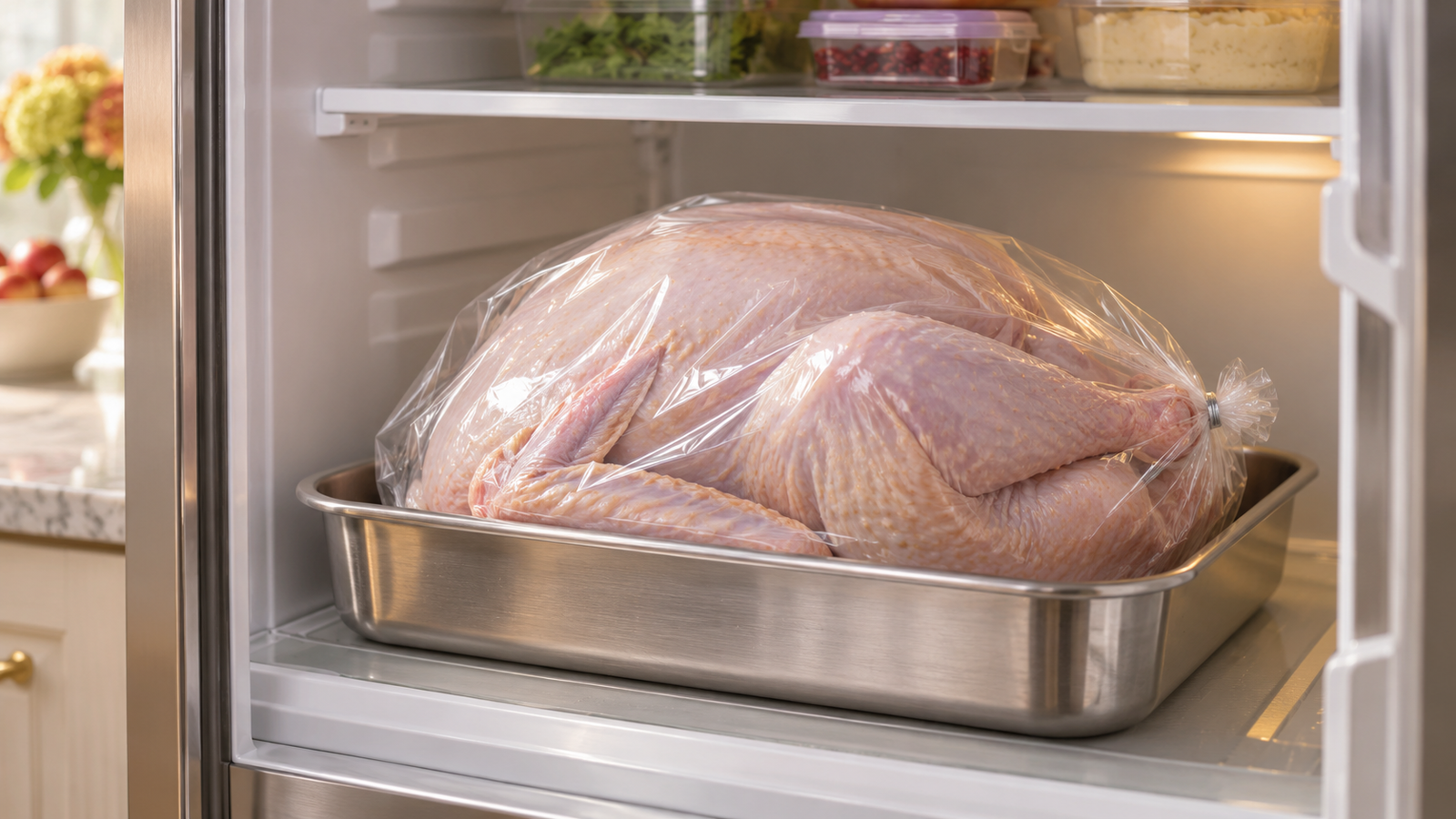
Make space before you bring the turkey home. The CDC advises keeping it in its original wrapping inside a container that catches escaping juices. It should not be able to drip onto other food.
A refrigerator-thawed turkey does not have to go straight into the oven the moment it finishes thawing. USDA guidance permits another one to two days in the refrigerator before cooking.
That window makes advance planning useful. It is not permission to leave the bird out while preparing side dishes, and it should not be extended because dinner has been postponed again.
Write the thawing start date into the same plan as your shopping and cooking. A reminder attached to the turkey’s actual weight is more useful than a general instruction to “get ready for Thanksgiving.”
If there is insufficient time for refrigerator thawing, the CDC’s cold-water method offers another option. Put the turkey in a leakproof plastic bag, completely submerge it in cold tap water and replace the water every 30 minutes. Allow about 30 minutes per pound, then cook immediately after thawing.
For a 14-pound turkey, that works out to approximately seven hours. Faster does not mean quick enough to start just before lunch. It also means someone needs to be available to change the water throughout the process.
Choose this method only when you can carry out the whole sequence, including cooking afterward. It is not a way to thaw the turkey today and leave the cooking for tomorrow.
A frozen center can create false reassurance. The CDC warns that a turkey left at room temperature for more than two hours becomes unsafe even if the middle remains frozen. Do not thaw it on the counter.
Nor should a cold-feeling garage or porch stand in for a refrigerator. USDA excludes these uncontrolled locations from safe thawing methods. Outside weather is not a substitute for controlled food storage.
Microwave thawing is another recognized method, but follow the appliance manufacturer’s directions and cook the turkey immediately afterward. Check the instructions before making it your fallback.
Once cooking begins, use a food thermometer. USDA specifies a minimum internal temperature of 165°F, checked in the thickest part of the breast and the innermost parts of the thigh and wing.
Keep three separate entries on your plan: when thawing begins, when cooking begins and when you expect to serve. That small distinction gives you a workable schedule—and keeps the turkey’s preparation from becoming a surprise on Thanksgiving morning.
Explore more practical food advice in our Guides archive.
Featured image: AI-generated editorial illustration for The Food Eaters.
Plan your turkey thawing around its weight and cooking day, with refrigerator timings and a safe cold-water backup.

Listening bars put carefully selected music and sound quality at the centre of a night out. Explore the format’s roots in Japan, how it is taking shape in India, and what first-time visitors should know.
Can home tests really tell whether ghee is pure? Here’s what FSSAI’s iodine test can detect, what popular home tests cannot prove, and when laboratory testing is needed.
High-protein snacks, drinks and desserts are everywhere, but extra protein does not automatically make a product healthier. Here is what matters beyond the front-of-pack claim.