From 15 October 2026, Uttar Pradesh will require use-by information on sweets. Here’s what shoppers should look for—and how it differs from FSSAI’s national best-before direction for loose sweets.
Buying Loose Mithai in Uttar Pradesh? What the New ‘Use-By’ Date Rule Means
From 15 October 2026, shoppers in Uttar Pradesh should start seeing a “Use By Date” displayed with sweets sold in the state under a new state-level food-safety direction.
That sounds straightforward, but there is an important piece of context: this is not the first date-display requirement for loose mithai in India. FSSAI had already issued a national direction in 2020 requiring a Best Before Date on the container or tray holding non-packaged sweets.
The useful question for consumers, then, is not simply “Is there a new rule?” It is: what exactly is changing in Uttar Pradesh, and how is a “Use By” date different from the older national “Best Before” requirement?
Quick answer: Uttar Pradesh’s official Information and Public Relations Department listed a 27 September 2026 announcement stating that displaying a “Use By Date” on sweets will become mandatory from 15 October. Separately, FSSAI’s national 2020 direction already requires loose sweets to show a Best Before Date on the tray or container. Those are related requirements, but the terms “use by” and “best before” do not mean the same thing under FSSAI definitions.
What Uttar Pradesh has announced for 15 October 2026
The Uttar Pradesh Information and Public Relations Department’s official 27 September 2026 press note lists a release dated 27 September 2026 titled, in Hindi, “15 October se mithai ki ‘Use By Date’ dikhana hoga anivarya”—in other words, displaying the use-by date of sweets will be mandatory from 15 October.
For consumers, the practical change is that the state is moving toward a clearer final-use date display at the point where sweets are sold.
This matters most for loose mithai sold from trays and counters, because those products do not come with the same printed package label a sealed box from a factory does.
There is one limit to what can responsibly be said at this stage: the publicly accessible UP primary material we could verify does not set out, in the page available to us, a detailed sticker format, font size, penalty schedule or a single fixed shelf life for every mithai. This guide therefore does not invent those details.
Loose sweets already had a national FSSAI date-display rule
The national background is easy to miss because several 2026 reports describe loose sweets as if they previously had no date-display requirement at all.
FSSAI’s 25 September 2020 order on sweets says that, from 1 October 2020, the container or tray holding non-packaged or loose sweets at the outlet should display the product’s Best Before Date mandatorily.
The same order says that displaying the Date of Manufacturing is voluntary, not mandatory, under that particular loose-sweets direction. It also says the food business operator should decide the Best Before Date depending on the nature of the sweet and local conditions.
So the careful way to describe the 2026 Uttar Pradesh move is this:
- National FSSAI baseline: loose sweets already had a mandatory Best Before Date display requirement from 1 October 2020.
- Uttar Pradesh’s 2026 direction: the state has announced a mandatory “Use By Date” display for sweets from 15 October 2026.
That distinction is important. The UP announcement is a state-level 2026 development; it should not be presented as if India had no earlier rule for date information on loose mithai.
“Use by” and “best before” are not the same thing
FSSAI’s Labelling and Display Regulations distinguish between the two terms.
A Best Before Date marks the end of the period during which a food is expected to remain fully marketable and retain its stated qualities under the specified storage conditions. FSSAI’s definition allows that food may still be safe after that date even if quality has declined, although it must not be sold if it has become unsafe.
A Use By or Expiry date is stricter: it marks the end of the estimated period after which the product may no longer have the safety and quality attributes normally expected, and the food should not be sold or distributed for human consumption.
For a shopper standing in front of a mithai counter, that means the wording matters. “Best before” is primarily a quality-date concept; “use by” is tied more directly to the final period for sale and consumption.
How long can different mithai last?
There is no single legal shelf life that applies to every Indian sweet.
FSSAI’s Guidance Note on Safety and Quality of Traditional Milk Products gives an illustrative shelf-life list. The document itself explicitly says it is guidance and does not have the force of law.
Its examples show why one universal number would make little sense:
- Same day: kalakand and similar high-moisture variants.
- About 2 days under refrigeration: several milk and Bengali sweets such as rasgulla, rasmalai, rabri and sandesh.
- About 4 days: many khoya sweets and ladoos, including milk cake, peda, burfi and boondi ladoo.
- About 7 days: a range of ghee- and dry-fruit-based sweets, including examples such as kaju katli and some gujias and ladoos.
- Around 30 days: longer-life products in the guidance list such as atta laddoo, besan laddoo, gajak and chikki.
These are not fixed legal expiry dates. Ingredients, moisture, refrigeration, handling and local conditions can all change how long a particular batch remains suitable.
What should you look for when buying loose mithai in UP?
From 15 October, the most obvious check is simple: look for the displayed Use By Date before buying.
But a date card is not a complete safety guarantee. A sweet can be mishandled before its stated date, just as a properly stored product can remain in better condition than one kept warm or exposed.
Also pay attention to the basics: whether the sweets are protected from obvious contamination, whether chilled products are actually kept cold, and whether the shop appears to follow reasonable hygiene practices. Our guide to what diners can actually check about restaurant hygiene in India explains the limits of visible checks and FSSAI licensing information.
If your concern is adulteration rather than shelf life, date labels answer a different question. For example, our FSSAI-backed guide to ghee purity tests explains why freshness and adulteration should not be treated as the same issue.
The bottom line
Uttar Pradesh’s 15 October 2026 “Use By Date” announcement gives consumers a clearer date to look for when buying sweets, especially loose mithai from trays and counters.
But the legal context matters. FSSAI had already made Best Before Date display mandatory for loose sweets nationally from 1 October 2020. UP’s 2026 move uses a different, stricter date concept: Use By.
Until the full state order and any detailed enforcement instructions are publicly accessible, consumers should avoid assuming more than the official material establishes. Look for the date, understand what it means, and remember that a label does not replace safe storage and handling.
Information checked: 1 October 2026.
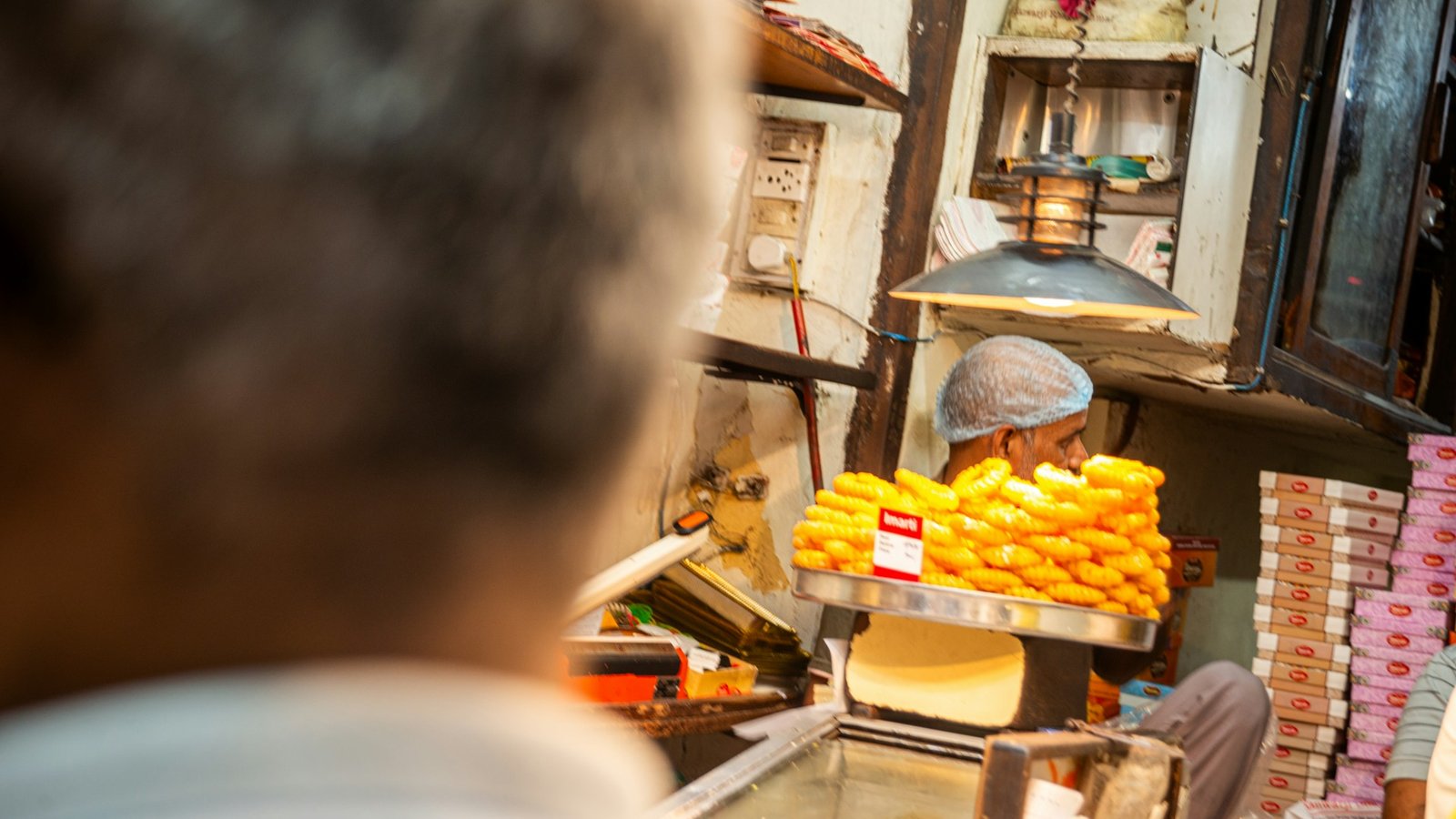
Featured image: Photo by Zoshua Colah / Unsplash. Imarti shown illustratively; this is not a photograph of a specific Uttar Pradesh shop or its date label.