Multiple delivery brands can operate from one cloud kitchen. Here’s what Indian consumers can verify, what FSSAI rules actually show, and what a shared kitchen does not prove.
Why Do So Many Delivery Brands Come From the Same Cloud Kitchen?
Open a food-delivery app and you may find several restaurant names offering different cuisines from the same address. Sometimes the packaging looks similar too. That can feel suspicious, but the shared address alone does not tell you that anything improper is happening.
One common explanation is a multi-brand cloud kitchen: a delivery-focused kitchen that prepares food for more than one digital restaurant brand from the same physical premises.
Quick answer: Multiple delivery brands can operate from one kitchen. FSSAI requires cloud kitchens to be licensed or registered, and its licensing system is premise-based. A shared kitchen is therefore not, by itself, evidence of fraud, unsafe food or a fake restaurant. What matters is whether the food business is properly registered, the listings are transparent, and the kitchen actually follows food-safety requirements.
First: what is a cloud kitchen?
A cloud kitchen is a food business built primarily for delivery rather than dine-in service. The customer sees a digital storefront on an app or website, while the cooking happens in a kitchen that may have no public seating area.
FSSAI addresses this directly in its licensing FAQs. The authority says that cloud kitchens with no seating arrangements still require an FSSAI licence or registration according to the applicable eligibility criteria. FSSAI licensing FAQs.
So “delivery only” does not mean “outside the food-safety system”.
Why can several brands come from the same kitchen?
The simplest reason is that a kitchen is an operating asset. Rent, equipment, refrigeration, staff, utilities and prep space cost money whether the kitchen is producing one menu or several.
Some operators therefore use one kitchen to support different delivery concepts: perhaps a biryani brand, a bowl brand and a dessert brand, each with its own name and menu positioning.
This is not a hypothetical business model. In 2022, Swiggy described its Brandworks programme as helping restaurant partners use spare kitchen capacity to create delivery-focused brands, including “multiple brands under one umbrella” and different concepts from a single kitchen. Swiggy Brandworks.
Zomato has also discussed the model publicly. In a 2022 note specifically about multiple brands from the same kitchen, the company said professionally run multi-brand kitchens can create operational efficiencies and lower costs. Zomato: multiple brands from the same kitchen.
Those platform examples explain why the model exists. They do not mean every multi-brand kitchen is well run, or that every brand sharing an address is owned by the same company.
How does FSSAI licensing work when one premises has several activities?
FSSAI describes food licences and registrations as premise-based. Its current FoSCoS eligibility page says a food-business premise should have only one FSSAI licence or registration, and that multiple kinds of food business can be endorsed on that licence where applicable. FoSCoS eligibility guidance.
FSSAI’s Food Safety Officer manual makes the same premise-based point: one premise has one licence or registration, while multiple kinds of business conducted at the same premises can be covered on it. FSSAI manual.
Zomato’s 2022 statement went further and said FSSAI had clarified to the platform that cloud-kitchen entities could operate multiple brands on a single FSSAI licence that is generally tied to the kitchen. That is Zomato’s account of the regulatory clarification; the more general FSSAI documents above establish the premise-based licensing framework.
The important consumer takeaway is that seeing several brand names at one address does not automatically imply that each digital brand should have a completely separate licence number.
Does the same address mean the brands are identical?
Not necessarily.
There are at least two different arrangements a customer might encounter:
- One operator, several virtual brands: the same kitchen business creates different delivery-only concepts for different cuisines or customer occasions.
- Several brands sharing kitchen infrastructure: different restaurant brands may operate from a common delivery-kitchen facility while keeping their menus and businesses distinct.
Zomato’s earlier cloud-kitchen infrastructure model, for example, described multiple restaurant brands being co-located in one delivery-only facility, each with its own operating space. Zomato Infrastructure Services.
So the address alone does not tell you who owns the brands or how similar the food actually is.
When does the multi-brand model become a consumer-transparency problem?
The problem is not simply “more than one brand”. The concern begins when separate listings create a false impression of choice or hide information that a reasonable customer would want to know.
Zomato made this distinction in its 2022 policy note. It said some operators created large numbers of brands with very little differentiation in the food, which it believed could confuse customers. The platform said it would manually review physical locations operating more than 10 brands and would show information linking multiple brands to the same kitchen.
That 10-brand figure was a Zomato platform-review threshold from 2022, not an FSSAI legal limit. It should not be treated as a government rule or as proof that a kitchen with fewer brands is automatically transparent.
A customer-facing question is more useful: are the listings meaningfully different, and can you tell who is actually preparing the food?
What can you actually verify as a customer?
1. Check the FSSAI number
FSSAI requires food businesses to display their licence or registration number, and its consumer services allow people to verify the authenticity and status of a licence. Food Safety Connect.
FSSAI also requires the 14-digit licence or registration number on food-business receipts, invoices, cash memos or bills. If the number is available on your order record, it gives you something concrete to verify rather than relying only on the brand name. FSSAI licensing FAQ.
2. Compare the address and operator details
If several brands share an address, that is useful context. It does not prove wrongdoing, but it tells you that the brands may share infrastructure or ownership.
3. Look at the menus rather than just the logos
Near-identical menus, descriptions and photographs across multiple listings can suggest that the distinction between the brands is mostly marketing. Different menus, meanwhile, still do not guarantee different kitchens.
4. Treat hygiene as a separate question
A shared kitchen is not automatically less hygienic than a conventional restaurant, and a unique restaurant name is not proof of good hygiene. Food safety depends on the actual premises, handling, storage, staff practices and compliance.
Our guide to what diners can actually check about restaurant hygiene in India explains what an FSSAI licence or Hygiene Rating can—and cannot—tell you.
Why delivery apps made this model easier to build
A physical restaurant normally has one visible front door, one signboard and one dining room. A delivery app separates the customer-facing brand from the physical kitchen.
That makes it possible for an operator to test a new menu or cuisine without fitting out another dining room. Swiggy’s Brandworks description explicitly framed the model around delivery-focused brands, unused kitchen capacity and relatively low incremental investment.
It also means consumers need to read digital listings differently. A “restaurant” on an app may be a traditional dine-in business, a delivery-only brand, a brand operating inside another restaurant’s kitchen, or one of several concepts produced at a shared facility.
For the wider industry context, see our explainer on how food-delivery apps changed restaurants in India.
What a shared cloud kitchen does not prove
It does not, by itself, prove that:
- the food is unsafe;
- the brands are fake;
- the business lacks an FSSAI licence;
- the menus are identical;
- one company necessarily owns every brand at the address; or
- the customer is being deceived.
Those are separate questions that need separate evidence.
Bottom line: Multiple delivery brands from one cloud kitchen are a recognised part of India’s delivery economy. The useful consumer test is not “same address = suspicious”. It is whether the business is properly licensed, the listing is transparent enough to understand what you are ordering, and the food-safety record gives you reason for confidence.
Information checked: 1 October 2026.
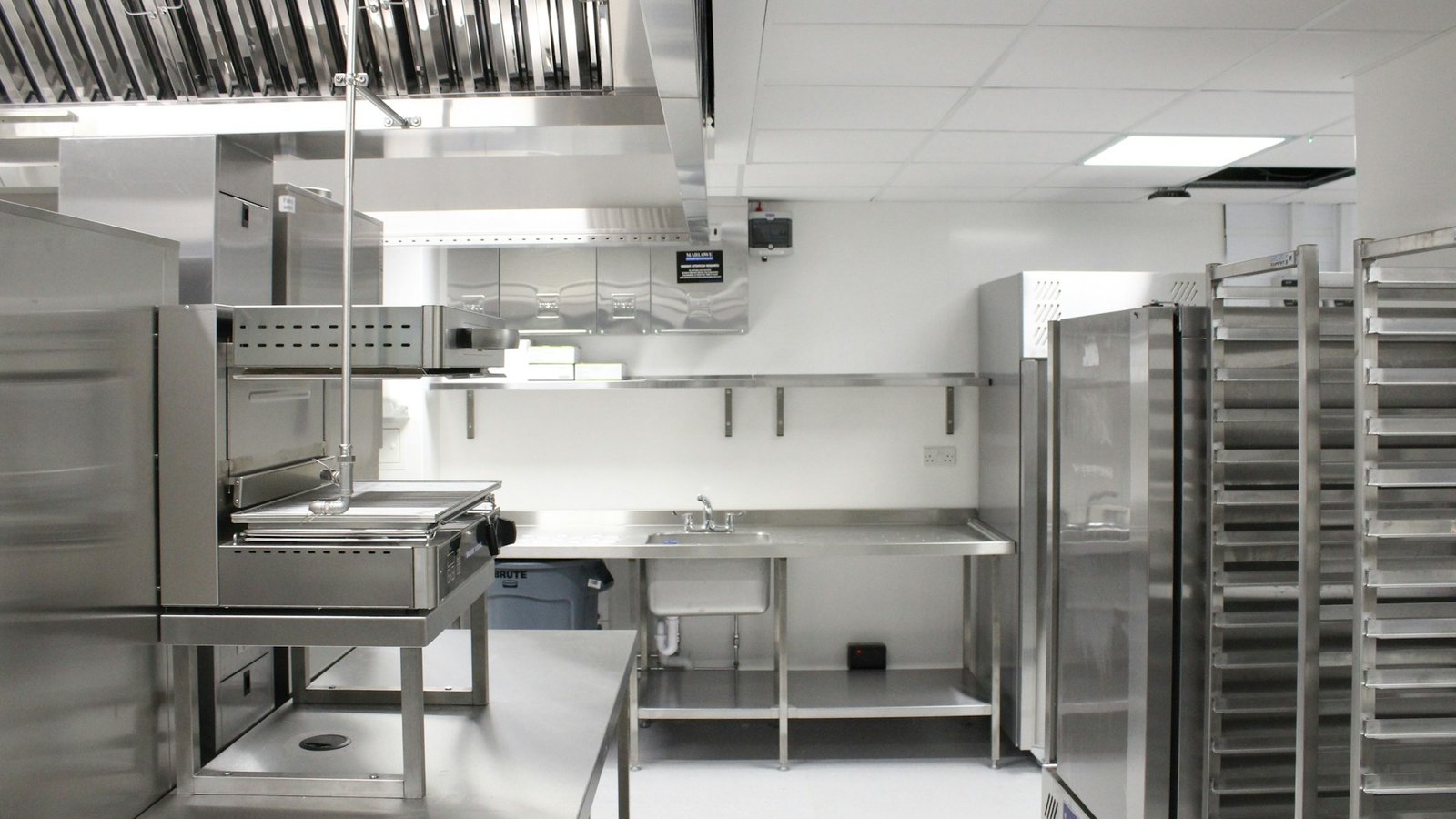
Featured image: Photo by Ceba Solutions / Unsplash. Professional kitchen shown illustratively; it is not identified as a specific cloud kitchen or delivery brand.