What is Durga Puja bhog? Understand khichuri, labra, the offering behind the meal, and what to ask before joining a community Puja lunch.
Durga Puja Bhog Explained: Khichuri, Labra and the Meaning of the Shared Meal
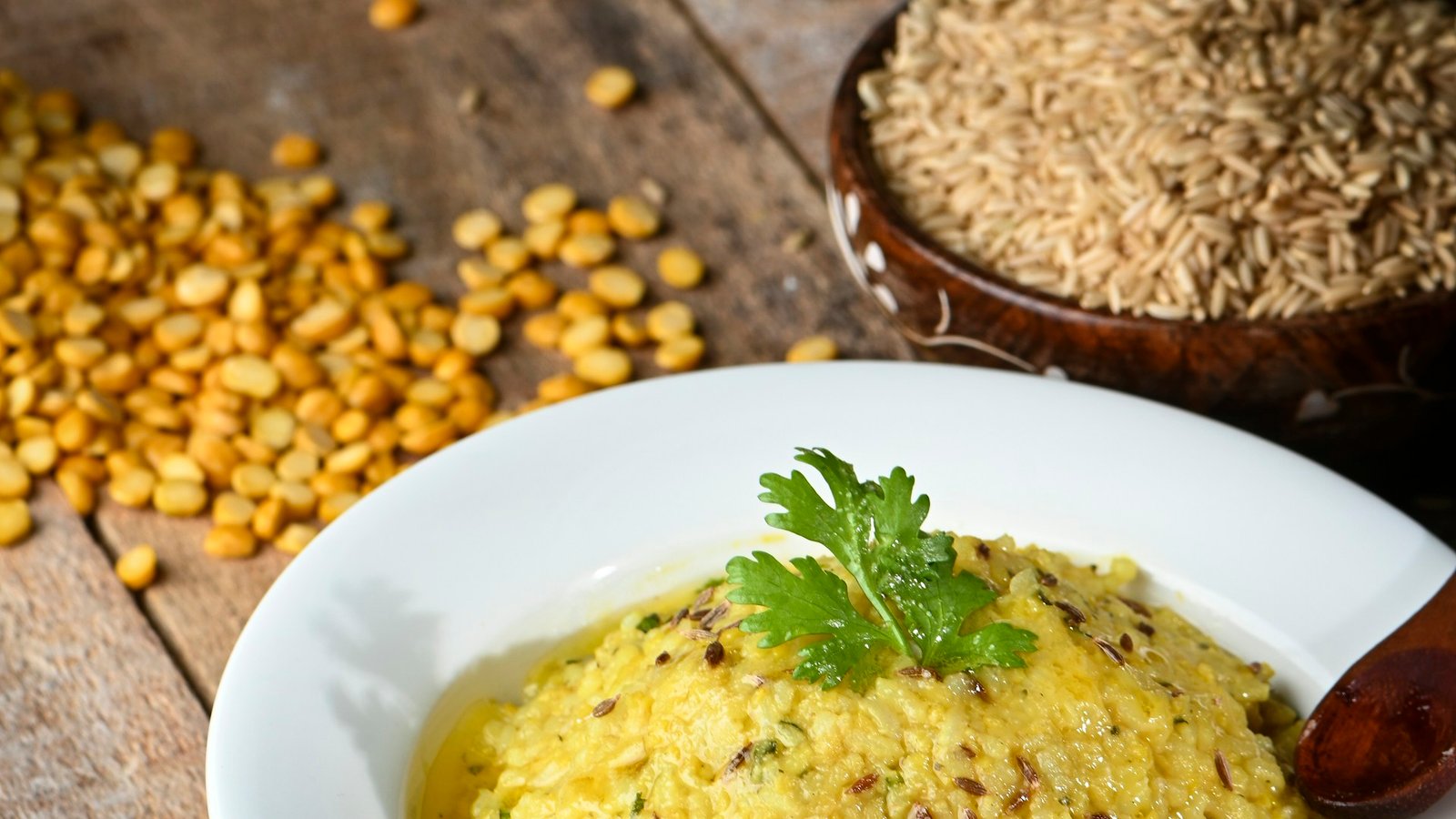
A plate of khichuri and vegetables can be lunch. In the setting of Durga Puja, food offered to the goddess and then shared has another meaning. Understanding that sequence is the starting point for understanding bhog.
The word should not be reduced to a restaurant-style menu category. A familiar combination of dishes helps people recognise a bhog meal, but the offering, the occasion and the people serving it are part of what makes the meal significant.
What is Durga Puja bhog?
The British Council-commissioned research on the creative economy around Durga Puja in 2019 describes bhog prasad as food offered to Durga before distribution to devotees and the public. It treats its preparation and distribution separately from restaurant and food-stall spending.
That distinction answers a common visitor’s question: a dish sold near a pandal is not necessarily bhog. Ask the organisers where the offering is distributed and how to join the meal. A commercial “bhog thali” may describe a style of menu; the name alone does not establish a ritual offering.
Khichuri: why rice and dal matter
Khichuri combines rice and pulses, but that broad description covers many versions. In their documented Bengali khichuri recipe, Bong Eats use roasted moong dal and gobindobhog, a fragrant short-grain rice. They describe the recipe as suitable for bhog as well as an everyday meal.
The ingredients explain why replacing one rice-and-dal preparation with another can change the dish. Rice variety, the treatment of the dal and the amount of liquid all affect the result. “Khichuri” is therefore a useful family name, not a guarantee of one texture everywhere.
Bong Eats also distinguish their onion-and-garlic-free versions from other khichuri preparations that contain those ingredients. For someone joining a Puja meal, the sensible approach is to ask about the actual preparation rather than assume that every dish carrying the name follows the same rules.
Labra: a vegetable dish with room for family difference
Labra is a mixed-vegetable preparation commonly associated with the khichuri meal. Bong Eats’ family recipe for labra describes seasonal vegetables cooked with ginger and Bengali five-spice. Their account is rooted in a family’s Lakshmi Puja tradition and explicitly notes that households differ in the vegetables they include.
That is a useful corrective to rigid lists of what labra “must” contain. A named family recipe can show how a tradition is practised without becoming a rule for every Puja committee. It also reminds us that dishes associated with Durga Puja have lives across other Bengali celebrations.
What else might be on the plate?
Khichuri and labra are familiar reference points, but they are not a complete national specification for bhog. A published festive-food account from Peerless Hotel Durgapur, for example, describes a bhog-style thali with khichuri, labra, beguni, chutney and payesh. That is an operator’s menu description, not proof of what a particular pandal will serve today.
Use such lists to learn dish names, then check the meal in front of you. A restaurant’s interpretation and a community’s offering should not be treated as interchangeable simply because some components are shared.
Joining a community meal respectfully
- Ask about access first. Check the serving time, location, availability and whether the committee uses registration or meal tokens.
- Follow the volunteers’ serving arrangements. Let them direct the queue, seating and second servings.
- Explain dietary needs before accepting a plate. Ask specifically about ingredients such as milk, ghee or nuts rather than assuming a vegetarian meal meets every requirement.
- Take an amount you expect to finish. Ask about another serving if you want more.
- Keep photographs considerate. Seek permission before taking close portraits of cooks, volunteers or other diners.
These are practical suggestions for being a considerate guest, not claims that every committee follows one system. The organiser is the right source for that day’s arrangements.
Read the meal in its wider setting
Bhog makes more sense when seen alongside the worship and gatherings around it. Our West Bengal Durga Puja guide explains that wider setting. For everyday checks when eating out, see our restaurant hygiene guide.
The most useful question is not whether one plate is the definitive version. It is who prepared it, for which occasion, and how the community has chosen to share it.
Details checked as of 20 October 2026. Confirm serving times, access and ingredients directly with the organising committee. This explainer draws on published research and credited culinary sources; it is not a first-hand tasting report.
Featured image: Photo by Mario Raj / Unsplash, under the Unsplash License. Illustrative rice-and-lentil dish; not a documented Bengali Puja bhog or community serving.