A practical guide to South Indian filter coffee: understand decoction, choose the right grind, adjust milk and strength, and make a repeatable cup.
South Indian Filter Coffee: What Decoction Means and How to Find Your Cup
A request for “strong coffee” can produce a confusing answer. One person means more coffee, another means less milk, and a third is describing a darker roast. With South Indian filter coffee, a more useful conversation begins with the decoction: the brewed concentrate that becomes the base of the cup.
Once you separate brewing from mixing, filter coffee becomes easier to order and easier to adjust at home. You can change the milk without changing the brew, or change the brew without making the cup sweeter. That is a better starting point than buying equipment and hoping the first attempt resembles your favourite café’s version.
What is coffee decoction?
In this context, decoction is the coffee collected after hot water passes through ground coffee in the filter. Blue Tokai’s South Indian filter guide describes a two-chamber arrangement: grounds sit above, and the brewed liquid collects below. Milk and sugar enter later.
The distinction matters when you buy supplies. Ground coffee needs brewing. Ready-made decoction is already a brewed product. Instant coffee is a different format again. Check the pack description instead of assuming that every product carrying “filter coffee” is used in the same way.
Buy for the filter you own
Tell the seller you are using a South Indian metal filter and ask for the appropriate grind. A bag selected for a French press or another brewer may not be the best starting point. If you already have a filter, take its size into account before following a recipe: a very small chamber cannot simply accommodate any published dose.
Start with a small pack. Note the coffee or blend name, grind and preparation instructions, then keep those details unchanged for a few brews. Buying several blends at once makes it harder to tell whether a disappointing cup comes from the coffee, the dose or the way it was prepared.
Read the ingredient list too. If a blend includes chicory, its composition is part of what you are choosing. Ask for the declared ratio rather than assuming all filter-coffee powders are identical. This is a preference question; a label is more useful than a blanket claim that one style is the only authentic choice.
A published brewing reference, not a universal formula
For a concrete starting reference, Blue Tokai specifies 18 grams of coffee with 100 millilitres of water at 95°C and roughly ten minutes of dripping. Its guide says to use the filter’s disc to level the grounds without pressing hard. These are the roaster’s instructions, not a recipe independently tested by The Food Eaters.
Use the instructions supplied with your own coffee and filter where they differ. What matters for learning is repeatability. Write down the dose, water quantity and approximate drip time so you can make a deliberate adjustment next time.
Adjust one thing at a time
If the finished cup seems too milky, reduce the milk on the next attempt while keeping the same decoction. If it is too sweet, change the sugar first. If you dislike the brewed coffee itself, review the coffee and brewing method before trying to hide it with more milk.
Keep a short note rather than a complicated tasting sheet: “less milk next time” is useful. Change one variable, taste again, and stop when the cup suits you. A repeatable preference is more valuable than someone else’s supposedly perfect ratio.
That attention to brewing has an institutional counterpart. The Coffee Board’s Indian Filter Coffee Championship page describes judging aroma, taste, body and presentation, and emphasises the balance of grounds, temperature and time. It is a useful reminder that the method involves choices, not merely a piece of metal equipment. The linked competition material concerns an earlier edition; this article is not announcing a new event.
How to order a cup you are more likely to enjoy
At a café, explain the change you want: less milk, less sugar or sugar on the side, if the kitchen can accommodate it. “Extra strong” is less precise. Ask whether the coffee is mixed to order, because a premixed batch may limit adjustments.
For a first visit, order the house version before requesting several changes. Then you have a reference for the next cup. The same principle applies at home: make one identifiable version, learn what you like about it and adjust from there.
For another comparison of preparation and taste, see our hōjicha and matcha guide. If coffee is part of a larger breakfast outing, our regional breakfast guide offers a starting point beyond the familiar café menu.
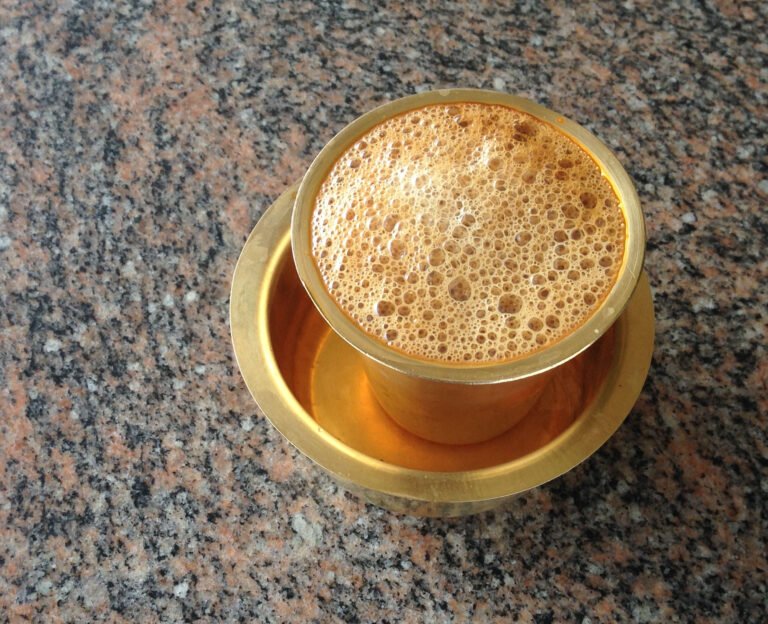
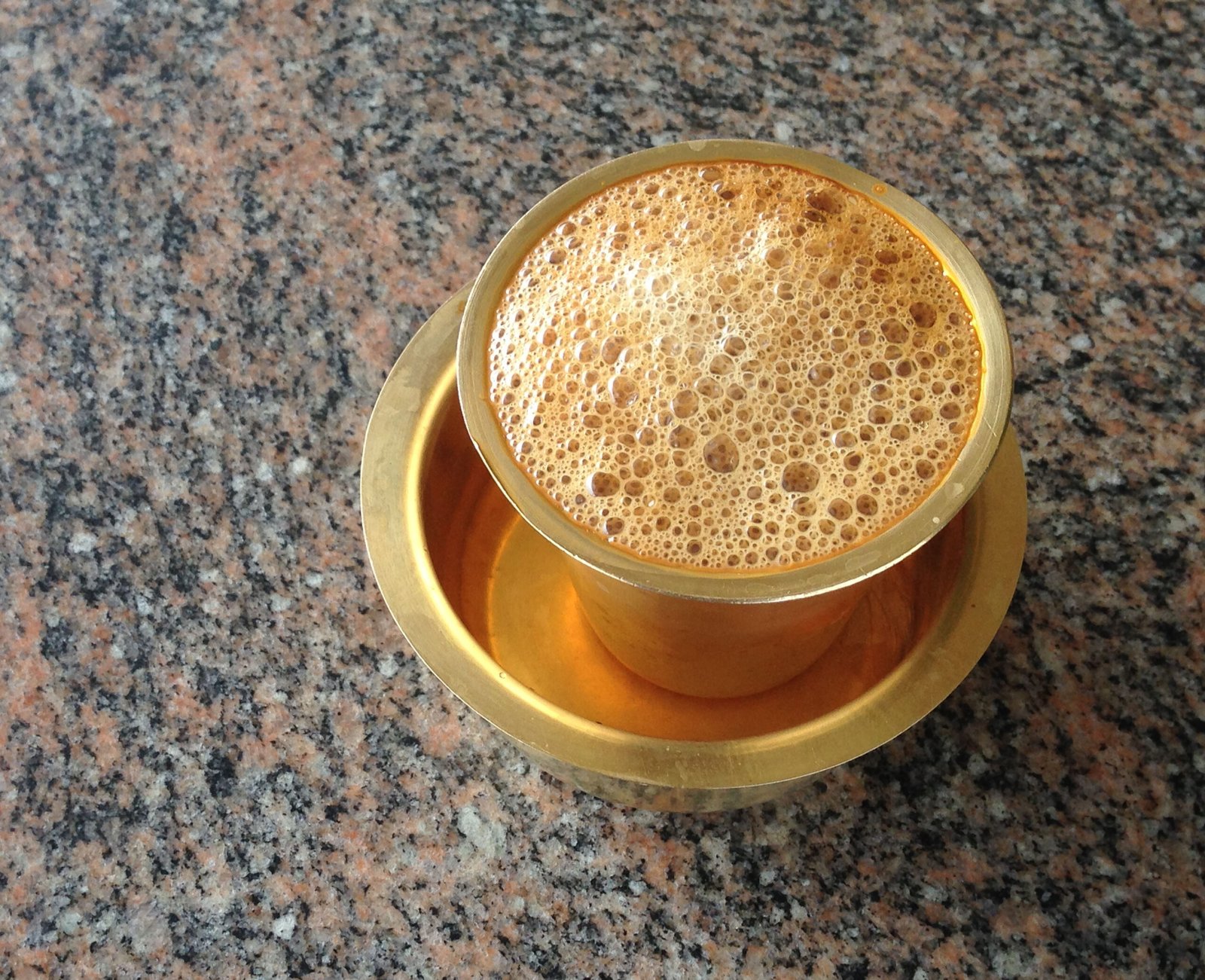
Featured photograph: South Indian filter coffee in a tumbler and dabarah, by Triv.rao / Wikimedia Commons, CC BY-SA 4.0. Resized for display; image derivatives remain under the same licence.