From Assam’s jolpaan and Indore’s poha-jalebi to Kashmiri harissa and Kerala puttu-kadala, these breakfasts show how different India’s morning food traditions can be.
8 Regional Indian Breakfasts Worth Knowing, From Jolpaan to Puttu-Kadala
Ask what people eat for breakfast in India and the answer changes almost immediately with region, season, household and city.
In Assam, breakfast can be built around soaked or flattened rice with curd and jaggery. In Indore, poha meets jalebi. In Kashmir, a winter morning can mean slow-cooked harissa. In Kerala, steamed puttu is paired with black-chickpea curry.
That range matters because “Indian breakfast” is often reduced to a short national menu of idli, dosa, paratha and poha. Those foods are important, but they are only part of the picture.
The eight breakfasts below are not a definitive ranking, and no single version should be treated as the only authentic one. Regional food changes across homes, communities and neighbourhoods. The point is to understand the structure of each breakfast: the grains, breads, accompaniments and eating traditions that make mornings look different across India.
1. Jolpaan — Assam
Jolpaan is better understood as a breakfast tradition than as one fixed dish.
Assam Tourism’s guide to the state’s cuisine describes jolpaan as a light Assamese breakfast or snack built from different forms of rice. Depending on the household or occasion, that can include chira (flattened rice), muri (puffed rice), bora saul, kumol saul, pithaguri or xaandoh.
These are often paired with curd, cream, jaggery or banana rather than cooked into an elaborate savoury dish.
One especially distinctive component is kumol saul, a soft rice that can be prepared by soaking rather than boiling. Assam Tourism notes that it can be eaten after soaking and draining, then mixed with milk, cream or curd and a little jaggery.
Jolpaan is also tied to social occasions beyond an ordinary weekday breakfast. The state tourism source notes its place at festivals, weddings and other community gatherings.
That makes it a useful reminder that breakfast in India is not always a hot cooked plate. It can also be a grain-based assembly shaped by local rice varieties and household custom.
2. Fafda — Gujarat
Fafda is one of Gujarat’s most recognisable savoury breakfast foods.
Gujarat Tourism describes it as a crisp, yellow snack made from gram flour, carom seeds and oil, rolled and fried until crisp. The official tourism page identifies fafda as a popular breakfast item as well as a festival favourite, especially around Dussehra.
It is commonly served with accompaniments that cut through the fried gram-flour base: fried chillies, papaya sambaro and besan chutney are among those listed by Gujarat Tourism.
What makes fafda particularly interesting as breakfast is the combination of texture and condiments. The fried strip itself is dry and crisp; the sides bring heat, moisture, acidity and sweetness depending on the version.
Fafda is also a good example of how the same food can move between breakfast, snack and festival eating without belonging exclusively to one meal.
3. Pyaaz Kachori — Rajasthan
Rajasthan has several kachori traditions, but pyaaz kachori is one of the most recognisable.
Rajasthan Tourism’s official cuisine guide explicitly describes kachori as something that can accompany breakfast and identifies pyaaz kachori as a major variation filled with a spiced onion mixture.
The appeal is structural: a crisp fried shell around a strongly seasoned filling. Depending on where it is served, chutneys or other accompaniments can add sweetness, heat or acidity.
Kachori is eaten at other times of day too, so calling it “breakfast food” does not mean it belongs only to the morning. In Rajasthan, the point is that a fried savoury pastry can occupy the same role that toast or a filled bread might play elsewhere.
That is part of the wider pattern in regional Indian breakfasts: familiar categories such as “bread,” “snack” and “meal” overlap more than they do on a Western-style breakfast menu.
4. Poha-Jalebi — Indore, Madhya Pradesh
Few city breakfasts are as strongly associated with place as Indori poha-jalebi.
The Indore district administration’s official food guide calls poha-jalebi a major breakfast combination and describes the city’s poha as flattened rice seasoned and finished with ingredients such as sev, jeeravan, fennel seeds, curry leaves, onion and lemon.
The sweet half of the pairing is jalebi: fried coils soaked in sugar syrup.
The interesting part is not simply “sweet with savoury.” It is how the two dishes create contrast. Poha is soft and lightly spiced, while sev can add crunch and jeeravan adds a characteristic savoury seasoning. Jalebi brings heat, crispness and intense sweetness.
Madhya Pradesh Tourism also treats poha-jalebi as one of the region’s signature morning foods, reinforcing how closely the pairing is tied to local food identity.
For a first-time visitor, it is worth thinking of the breakfast as a combination rather than judging poha and jalebi separately. The contrast is the point.
5. Bedmi Aloo and Nagori Halwa — Old Delhi
Old Delhi’s vegetarian breakfast culture has its own rhythm, especially around long-running sweet shops.
The Indian Express documented the breakfast at Shyam Sweets in Chawri Bazaar as a combination of bedmi aloo, matar ki kachori and halwa-nagori.
Bedmi is a fried bread made with wheat flour and ground urad dal mixed with spices, served with a savoury potato preparation. Nagori is a smaller, crisp semolina poori paired with halwa.
The result is a breakfast that deliberately moves between savoury and sweet rather than separating them into different courses.
Our Old Delhi street-food walk focuses on a broader route through Chandni Chowk and Jama Masjid; breakfast is another useful lens on the neighbourhood because many of these foods are tied to early-morning shop routines.
It is also a reminder that “Delhi breakfast” is too broad a category. Old Delhi’s bedmi-and-nagori tradition is very different from the café breakfasts or hotel buffets found elsewhere in the city.
6. Kochuri with Alur Torkari or Chholar Dal — Kolkata
In Kolkata, kochuri is one of the city’s familiar breakfast foods, particularly at sweet shops and old snack counters.
The Telegraph’s Kolkata food coverage describes several forms, including hing kochuri, khasta kachori and seasonal koraishutir kochuri, and notes that they are commonly served with alur torkari or chholar dal.
A simpler way to understand the breakfast is as hot fried bread plus a strongly flavoured accompaniment.
The filling can change: hing-forward lentil mixtures, green peas in winter, or other variations. The side can change too. Potato curry gives one kind of meal; slightly sweet chholar dal with coconut creates another.
That flexibility is part of what makes kochuri important to the city’s breakfast culture. It is not one frozen recipe but a format that supports seasonal and neighbourhood variation.
7. Harissa with Kashmiri Bread — Kashmir
Kashmiri harissa is one of the heaviest breakfasts in this list, and it belongs strongly to winter.
The Indian Express describes harissa as a slow-cooked Kashmiri mutton preparation associated with cold-weather mornings. The meat is cooked with rice and aromatic spices until it reaches a thick, almost porridge-like consistency.
The same report discusses Kashmiri breads such as tchot or girda, which are part of the region’s breakfast culture and can accompany morning food and tea.
Harissa is not an everyday year-round breakfast in the way poha or puttu can be. Its identity is seasonal. That makes it a useful contrast with the other entries here: climate is part of breakfast culture too.
Long cooking, a rich meat-and-rice base and hot bread make sense in a winter food tradition in a way they might not in a humid coastal morning.
8. Puttu and Kadala Curry — Kerala
Kerala’s puttu-kadala pairing is one of the clearest examples of a breakfast built from grain, coconut and pulses.
Kerala Tourism’s official recipe guide describes puttu as coarse rice flour layered with grated coconut and steamed, traditionally producing the familiar cylindrical shape.
Kadala curry is made with black chickpeas, coconut and spices. The exact seasoning changes between households and regions, but the contrast is consistent: mild steamed puttu absorbs the darker, more assertive curry.
Kerala Tourism repeatedly identifies puttu and kadala curry as a breakfast combination across its food and responsible-tourism material.
It is also a useful way to understand why “rice for breakfast” means many different things in India. In Assam, rice may appear soaked or flattened in jolpaan; in Kerala, rice flour becomes a steamed cake.
What these breakfasts reveal about regional Indian food
The biggest mistake is to look at this list and search for one formula for “Indian breakfast.” There is not one.
Some breakfasts are built around rice. Others around gram flour, wheat, lentils or meat. Some are fried and eaten from a shop counter. Others are assembled at home. Some are seasonal. Some move easily between breakfast and snack.
The same regional specificity appears elsewhere in Indian food. Our guide to why India has so many regional styles of biryani makes a similar point: a familiar category can change dramatically with local grain, fat, spice, technique and history.
Breakfast may be an even clearer example because it sits close to daily routine.
What people eat first thing in the morning depends on what is available nearby, what can be prepared before work, what neighbourhood shops open early, which grains are common, and how climate changes appetite across the year.
That is why the most interesting way to explore Indian breakfast is not to ask which dish is “best.”
It is to ask what a morning plate tells you about the place it comes from.
Food traditions and source references checked as of 6 October 2026. Regional recipes vary between households, communities and vendors; the descriptions above are guides, not claims of one definitive version.
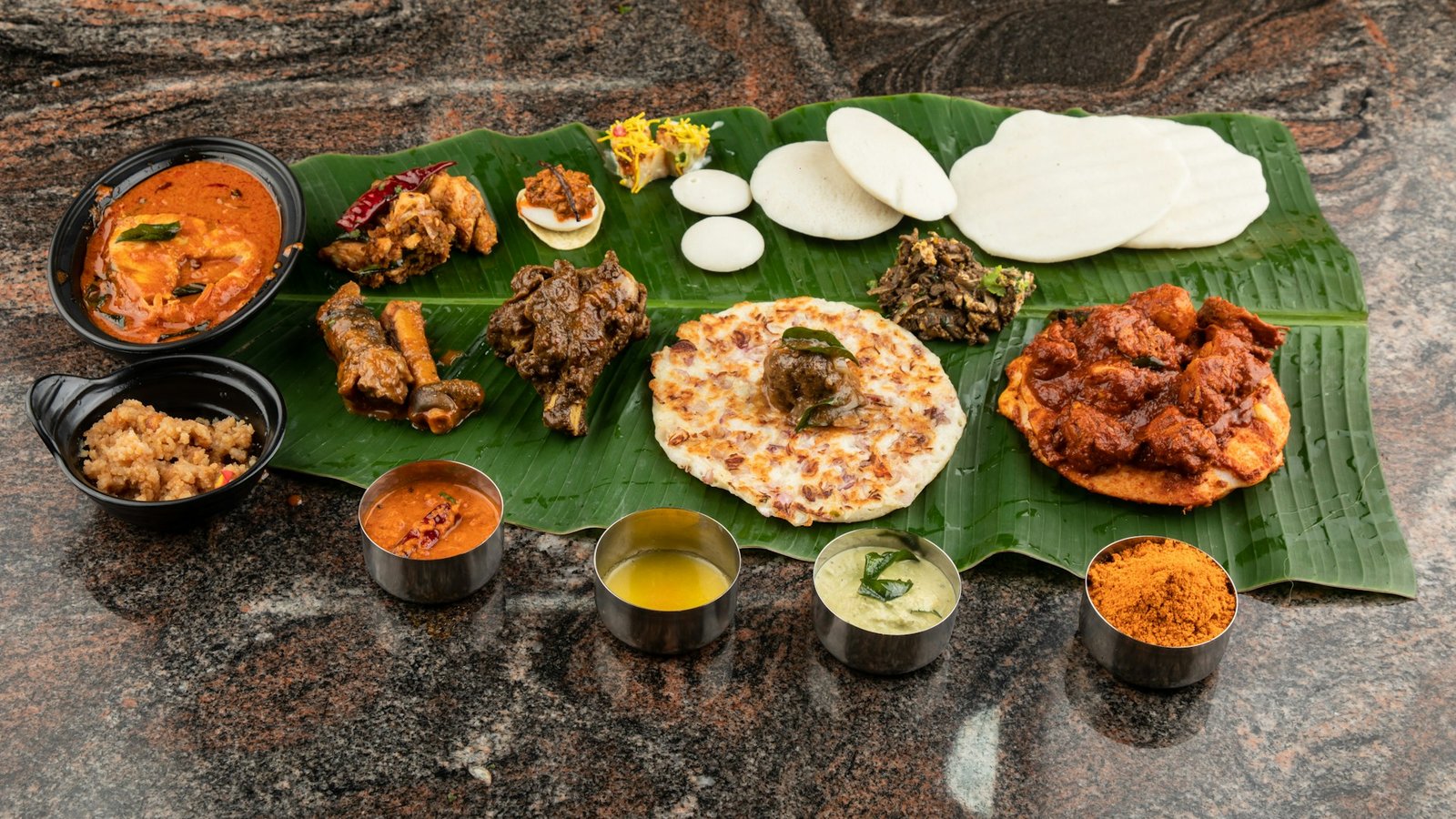
Featured image: Photo by Anil Sharma / Unsplash. Assorted Indian dishes shown illustratively; this photograph does not depict the eight breakfasts in the article as one meal.