FSSAI’s September 2026 paneer proposal is still a draft. Here’s what already applies to dairy analogues, what the new amendment would change, and what diners should look for.
Is It Really Paneer? What FSSAI’s 2026 Analogue Draft Means for Diners
“Fake paneer” has become an easy phrase online, but it can blur together several different things: paneer that does not meet the legal standard, an adulterated product, and a separately regulated analogue in the dairy context that uses non-milk constituents.
Those are not automatically the same category.
That distinction matters because FSSAI made a new move on 24 September 2026: it published a draft amendment aimed at stopping products licensed as “Analogue in Dairy Context” from using the word “Paneer” in their nomenclature, labelling or marketing.
But the proposal is not yet a final nationwide amendment.
As of 6 October 2026, FSSAI still lists it under its official draft notifications. The Press Information Bureau’s 24 September release says objections and suggestions were invited and that the draft would be considered after the 60-day consultation period specified in the notification.
So what already applies today, and what would actually change if the draft becomes final?
First: what does FSSAI legally mean by paneer?
FSSAI’s current dairy standards define chhana or paneer as a product obtained from milk, with or without added milk solids, by precipitation with permitted acidulants and heating.
The current standard lists milk and milk solids as the raw materials for paneer. It also sets separate compositional specifications for paneer, medium-fat paneer and low-fat paneer.
That definition is important because “paneer” is not just a generic name for any white, firm food that behaves similarly in a curry.
Under FSSAI’s standards, the term refers to a defined milk product.
FSSAI’s current dairy standards can be read in its official chapter on dairy products and analogues.
What is an “analogue in the dairy context”?
FSSAI also recognises a separate category called “Analogue in the Dairy Context.”
In its official FAQ on dairy analogues, FSSAI explains that an analogue is a product in which one or more milk constituents are replaced, partly or wholly, by constituents not derived from milk, while the finished product resembles a milk product in appearance, sensory characteristics or function.
For example, replacing milk fat or milk protein with a non-milk fat or protein can move a lookalike product into the analogue category.
The important point is that an analogue product is not automatically an illegal product.
FSSAI already has a regulatory framework for analogues. The consumer-protection issue is whether the product is being identified and presented clearly rather than being passed off as the dairy product it resembles.
What existing rules already say about labelling analogues
FSSAI’s existing framework already requires pre-packaged analogue products to disclose relevant non-milk substitution.
The authority’s FAQ summarises declarations such as “Contains …” followed by the relevant non-milk constituent and its source. Where a milk constituent has been fully replaced, the required declaration can also identify that the relevant milk constituent is absent.
Existing rules also restrict the use of dairy terms in ways that could make a non-dairy product appear to be a milk product.
This is why the September 2026 draft should not be read as if no rules existed before it. The new proposal is designed to make the treatment of the word “Paneer” more explicit for products in the analogue category.
The April 2026 West Region notice is already a separate enforcement action
There is another 2026 development that is easy to confuse with the September draft.
In April 2026, FSSAI’s West Region issued a public notice on cheese analogue manufacturers and food-service establishments.
The notice was not the September nationwide draft amendment. It was an enforcement and compliance direction based on requirements that already existed.
According to FSSAI and the government’s subsequent public communication, the West Region notice directed centrally licensed manufacturers and food-service establishments in particular, and other food businesses more generally, to comply with existing requirements for cheese analogues.
It specifically stated that cheese analogue sold as “paneer” violates the applicable requirements and must cease.
It also directed food-service establishments to avoid procuring cheese analogue under the name paneer and to disclose the use of cheese analogue, where applicable, on menus or display boards so that consumers are not misled.
That April notice matters now because it shows that FSSAI was already acting on misleading paneer-style naming before the September proposal appeared.
So what does the September 2026 draft actually propose?
The 24 September draft listed by FSSAI is titled the Draft Food Safety and Standards (Prohibition and Restrictions on Sales) Amendment Regulations, 2026 relating to paneer made from constituents not derived from milk.
The PIB explanation issued the same day says FSSAI proposes to add a specific provision under the Prohibition and Restrictions on Sales Regulations.
If finalised in the proposed form, products already licensed or registered under “Analogue in Dairy Context” would have to stop using the term “Paneer” in their:
- product nomenclature;
- labelling; and
- marketing.
The objective is to reserve “paneer” for the milk-derived product defined in FSSAI standards and prevent an analogue from being presented under the same name.
But this needs a crucial qualifier: that paneer-specific amendment is still only proposed.
It should not be reported as a final national ban already in force.
The proposal does not ban every dairy analogue
This is another place where headlines can become misleading.
The September draft is about preventing an analogue product from being represented as paneer. It does not say that every product in the analogue-in-dairy-context category will become prohibited.
Analogue products can continue to exist as a separately identified regulatory category, subject to the applicable standards, licensing and labelling requirements.
The proposed change is about what such a product may be called and how it may be marketed when it resembles paneer.
For consumers, that is an important difference. A product can be compositionally different from paneer without that fact alone meaning it is adulterated or unsafe.
“Analogue,” “adulterated” and “substandard” are different questions
Calling every non-standard paneer-like product “fake paneer” makes the issue harder to understand.
An analogue is a defined regulatory category involving substitution of milk constituents with non-milk constituents.
Adulteration is a different compliance issue: it concerns food that has been altered, substituted, contaminated or represented in a way that breaches applicable food-safety law.
Substandard paneer can also refer to a product that is sold as paneer but does not meet required compositional standards.
Those categories can overlap in an enforcement case, but they should not be treated as synonyms.
The same distinction appears in other food-safety debates. Our guide to what FSSAI’s ghee purity tests actually tell consumers explains why appearance and viral home tests cannot substitute for the specific thing a regulatory or laboratory test is designed to detect.
What should a packaged product tell you?
If you are buying a packaged paneer-style product, start with the product name and ingredient information, not the colour or texture.
For a product regulated as an analogue, FSSAI’s existing framework already requires declarations identifying non-milk constituents that replace milk components.
A package that is clearly identified as an analogue is therefore a different regulatory situation from a lookalike product being marketed simply as paneer.
If the September draft becomes final in its current form, the separation would become even clearer because licensed analogue products would no longer be allowed to use “Paneer” in their nomenclature, labelling or marketing.
What about restaurant menus?
Restaurants are where the issue can become harder for a diner to see because the ingredient may arrive as part of a dish rather than in its retail packaging.
FSSAI West Region’s April public notice already instructed food-service establishments covered by the notice to maintain vigilance over incoming materials and to disclose the use of cheese analogue on menus or display boards where applicable.
For diners, the practical principle is straightforward: if a menu says paneer, the term should not be used to disguise a different analogue product.
If a restaurant clearly identifies an analogue or substitute, that is a different proposition from silently presenting it as paneer.
Our broader guide to what diners can actually check about restaurant hygiene and FSSAI compliance explains why visible dining-room cleanliness cannot answer every question about sourcing or raw materials.
Can you tell by squeezing, frying or tasting it?
There is no reliable consumer rule that turns texture, colour or frying behaviour into a legal classification.
Paneer itself varies with milk type, moisture, fat level, processing and freshness. Analogue products can also be formulated specifically to resemble dairy products in texture and cooking behaviour.
So a social-media test such as “it feels rubbery, therefore it is fake” is not a substitute for the product’s regulatory identity, label, procurement records or laboratory analysis.
For a consumer, the most useful evidence is still what the product is called, what its label declares and—where food service is involved—whether the establishment identifies the ingredient accurately.
Why the September proposal matters even though it is not final
The proposal matters because it would make the paneer naming issue much more direct.
Instead of relying only on broader dairy-term and analogue-labelling rules, the amended sales regulation would specifically address products made from constituents not derived from milk that are represented as paneer.
That could make the rule easier for both businesses and consumers to understand.
But consultation is part of the regulatory process. Draft wording can change before a final regulation is notified.
As of 6 October 2026, the correct description is therefore:
- Current standard: paneer is defined by FSSAI as a milk-derived product.
- Existing analogue rules: analogues are a separately regulated category and already have identification and labelling requirements.
- April 2026 West Region notice: FSSAI West Region directed compliance with existing rules and said cheese analogue must not be sold as paneer.
- September 2026 proposal: FSSAI has proposed a specific nationwide restriction preventing products licensed as “Analogue in Dairy Context” from using “Paneer” in nomenclature, labelling or marketing.
- Legal status of that proposal: draft consultation, not yet a final notified amendment.
What diners should take away
The most useful question is not, “Is every paneer substitute dangerous?” The official documents do not support that conclusion.
The better question is, “Am I being told accurately what this product is?”
FSSAI already treats paneer and dairy analogues as different regulatory categories. The April enforcement notice reinforced that distinction in food service. The September draft would make the paneer-specific naming restriction even more explicit nationwide if it is finalised.
Until then, diners should read the September move as a proposal to strengthen clarity, not as a new law that has already outlawed all analogue products.
Regulatory status and source links checked as of 6 October 2026. The September 24 amendment remains a draft consultation; recheck FSSAI’s final notifications before treating the proposal as enforceable nationwide law.
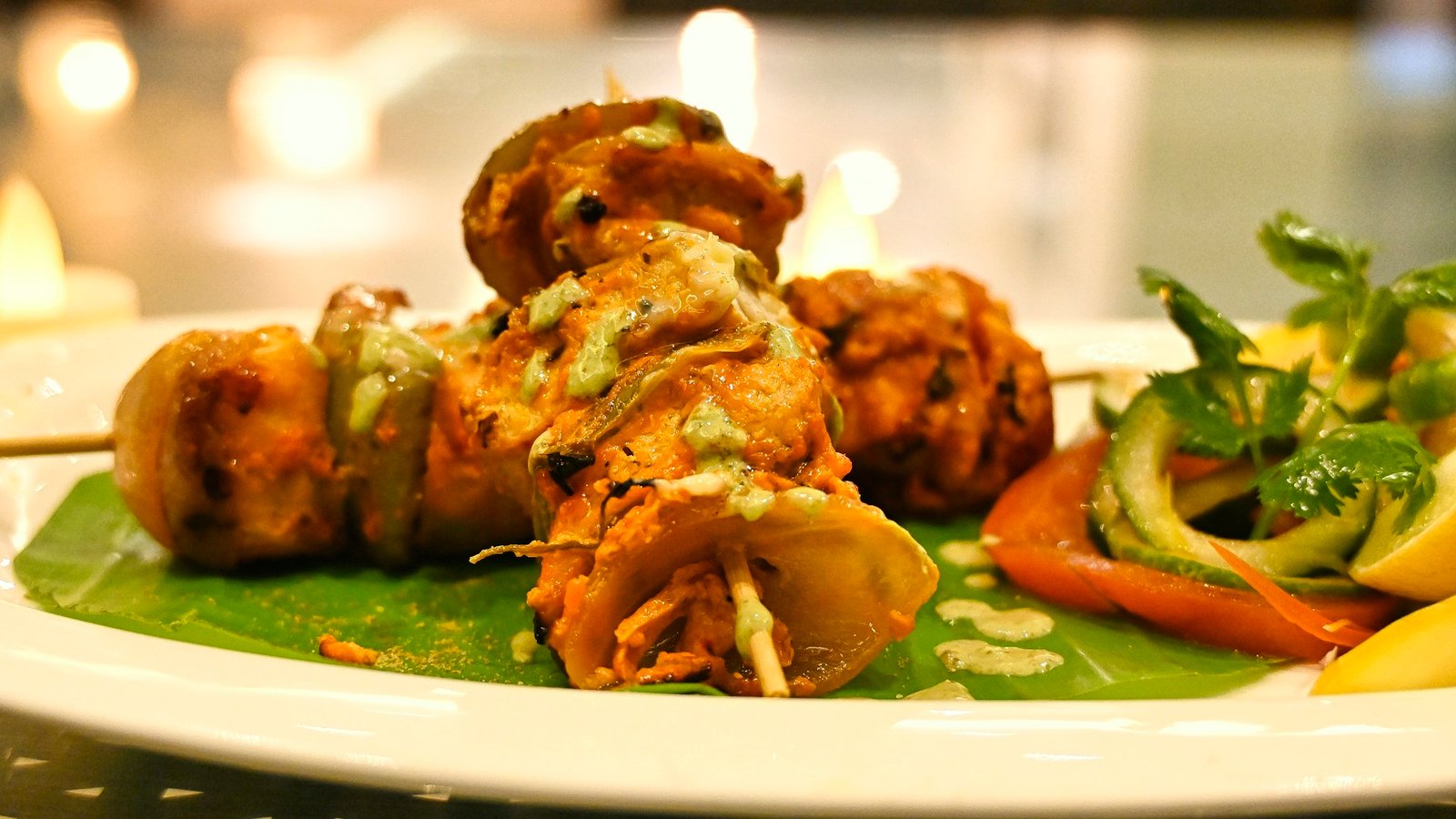
Featured image: Photo by Rupa venketa vardhan / Unsplash. Paneer tikka shown illustratively; this photograph does not depict an FSSAI-inspected analogue product.