FSSAI’s food-grade silver-leaf standard requires at least 999/1000 silver purity and bans animal-origin material in manufacture. Here’s what that means—and what shoppers cannot tell by sight.
Is Chandi Varq on Mithai Really Vegetarian? What FSSAI Actually Requires
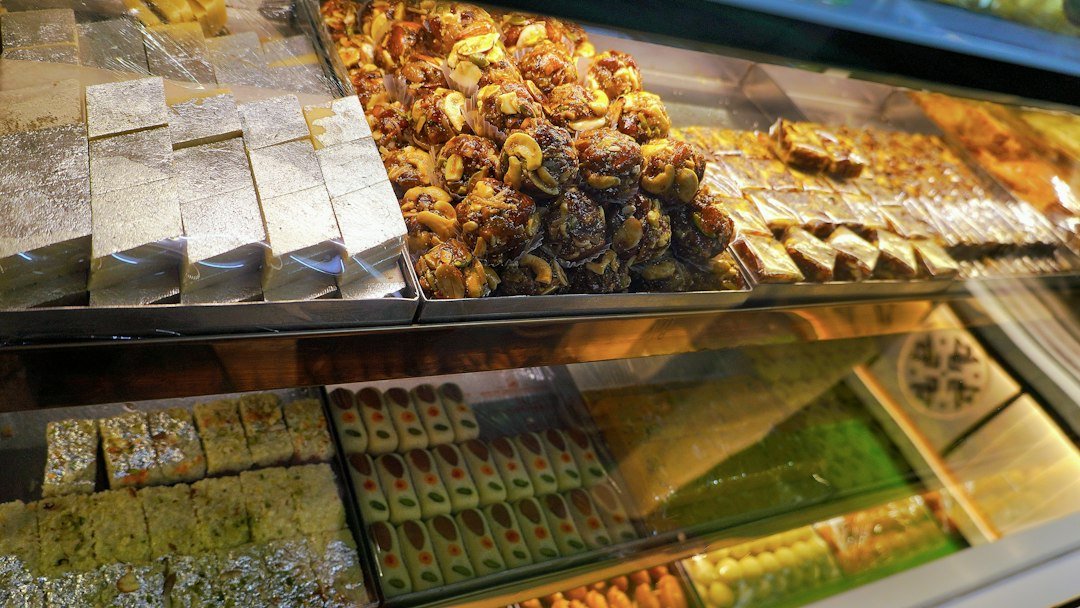
The silver leaf on kaju katli, barfi and festive mithai looks decorative enough to seem like a simple finishing touch. But chandi varq is also a regulated food ingredient.
That matters because one question comes up repeatedly: is the silver leaf on mithai actually vegetarian?
Under FSSAI’s current food-grade silver-leaf standard, compliant chandi varq must not be manufactured using any material of animal origin at any stage. The same standard also requires a minimum silver purity of 999/1000 fineness.
Those are clear regulatory requirements. What is not clear from appearance alone is whether the foil on a particular sweet actually complies.
What FSSAI’s silver-leaf standard actually says
FSSAI’s 2016 Gazette notification on food-grade silver leaf replaced the earlier standard for “Silver Leaf (Chandi-ka-warq)”. The amended standard came into force from 1 August 2017.
It requires food-grade silver leaf to:
- be in the form of sheets of uniform thickness, free from creases and folds;
- have a silver-foil weight of up to 2.8 grams per square metre;
- contain silver of at least 999/1000 fineness; and
- not be manufactured using any material of animal origin at any stage.
The same wording continues to appear in FSSAI’s consolidated food-product standards, which means this is not merely an old proposal or a historical recommendation. It is part of the current food-grade standard.
So, is compliant chandi varq vegetarian?
For the silver leaf itself, the relevant FSSAI answer is clear: food-grade chandi varq manufactured in compliance with the standard cannot use animal-origin material at any stage of production.
That does not mean every mithai covered with silver leaf is automatically vegetarian for every consumer.
The varq standard applies to the silver leaf. The rest of the sweet has its own ingredients, processing aids and preparation method. Milk, ghee, colours, flavourings and other components have to be considered separately if a shopper is trying to understand the whole product.
The useful distinction is therefore:
- Compliant food-grade varq: the manufacturing process must not use animal-origin material.
- The mithai underneath: its vegetarian status depends on its own ingredients and preparation.
Why did FSSAI add the animal-origin requirement?
The regulation itself does not require shoppers to understand every traditional manufacturing technique. It simply sets the compliance rule: no animal-origin material can be used at any manufacturing stage.
That clause matters because older descriptions of silver-leaf production sometimes referred to beating silver between animal-derived membranes or skins.
FSSAI’s standard removes that ambiguity for food-grade silver leaf sold under the current rule.
For a vegetarian consumer, that makes the regulatory question more useful than folklore about how varq “used to be made”. What matters is whether the product being used today complies with the current standard.
What does 999/1000 silver purity mean?
FSSAI requires food-grade varq to contain silver of at least 999 parts out of 1000.
That is a compositional specification for the silver itself. It is not a visual test.
A very shiny sheet does not prove 999/1000 fineness. A sheet that looks duller does not automatically prove contamination or adulteration.
Proper verification of metal purity depends on the manufacturer’s compliance controls and, where necessary, laboratory analysis.
That is why the question “does it look like real silver?” is not the same as “does it meet the FSSAI standard?”
Can you test chandi varq at home?
There are many viral claims online suggesting that shoppers can verify silver leaf by rubbing it, burning it, adding acid or judging what happens when it is heated.
Those are not reliable ways to establish full compliance with FSSAI’s standard.
More importantly, acid and burn tests should not be treated as safe home experiments. They can involve hazardous chemicals, fumes or flames, and even a visible reaction would not answer all of the relevant regulatory questions.
A home observation cannot tell you whether the silver is exactly 999/1000 fine or whether animal-origin material was used during manufacture.
The same limitation applies to many viral food-adulteration tests. Our guide to what FSSAI’s ghee purity tests actually tell you explains why a simple home test can answer one narrow question while missing other forms of non-compliance.
Does shiny foil prove that a mithai is adulterated?
No.
Silver leaf is supposed to be shiny. Appearance by itself is not evidence that the foil is unsafe, impure or made from a prohibited material.
Likewise, a foil that tears easily or looks slightly uneven cannot, by itself, prove that it is not genuine food-grade silver leaf.
Consumers should be cautious about social-media rules that claim colour, shine, texture or how quickly a sheet dissolves can give a definitive answer.
The FSSAI standard is based on composition and manufacturing requirements, not a visual checklist for shoppers.
What should you check when buying loose mithai with varq?
When mithai is sold loose from a counter, the shopper usually cannot see the original packaging or supplier information for the silver leaf used by the shop.
That makes the food business’s sourcing and compliance practices more important than any home trick.
A few practical questions are still reasonable:
- Is the mithai being sold by a clearly identifiable food business?
- Does the shop display its FSSAI licence or registration information where required?
- If you have a strict vegetarian concern, can the business confirm that it uses food-grade silver leaf compliant with FSSAI standards?
- Are there any other ingredients in the sweet that matter to your dietary preference?
These checks do not prove silver purity, but they are more meaningful than judging the foil by shine.
What about packaged mithai?
Packaged sweets give consumers more information because the food label identifies the manufacturer or packer and provides the FSSAI licence information required for that product.
The presence of chandi varq does not create a separate “vegetarian certification” for the entire sweet. The whole packaged food still has to follow the relevant vegetarian/non-vegetarian labelling requirements that apply to the product.
If the silver leaf itself is food grade, however, the FSSAI standard requires the varq manufacturing process to be free of animal-origin material.
How is this different from the new UP loose-mithai date rule?
This issue is separate from shelf life.
Our guide to Uttar Pradesh’s 2026 loose-mithai “Use By Date” direction deals with date information for sweets sold from trays and counters.
The silver-leaf rule answers a different question: what must the decorative edible silver itself be made from, and how must it be manufactured?
A sweet can have a correct use-by date and still have a separate ingredient-compliance issue. Conversely, compliant silver leaf says nothing about how long the mithai underneath should be stored.
What if you suspect non-compliant varq?
Consumers cannot reliably prove metal purity or manufacturing history at the counter.
If there is a genuine concern about a food business using non-compliant ingredients, the appropriate route is to raise the issue with the food business or the relevant food-safety authority rather than attempting hazardous chemistry at home.
FSSAI maintains a central advisories and compliance hub, while state food-safety authorities handle local enforcement and sampling.
The important thing is to separate suspicion from proof. A shiny sheet is not evidence of contamination, and a viral test result is not the same as a laboratory finding.
The bottom line
Under FSSAI’s food-grade silver-leaf standard, chandi varq must contain at least 999/1000 silver and must not be manufactured using any material of animal origin at any stage.
That makes compliant food-grade varq compatible with the specific vegetarian concern around animal-derived manufacturing materials.
But consumers should not extend that conclusion too far. The standard does not make every mithai vegetarian by default, and it does not give shoppers a reliable visual test for silver purity.
If the question is whether the silver leaf itself complies, the answer comes from the regulated supply chain and, where necessary, proper testing—not from how shiny the sweet looks.
FSSAI standard and source links checked as of 9 October 2026. This guide explains the regulatory requirements for food-grade silver leaf; it does not certify any individual sweet shop or product.
Featured image: Photo by Bonala Yellender / Unsplash. Mithai is shown illustratively; the photograph does not establish the foil’s composition or regulatory compliance.