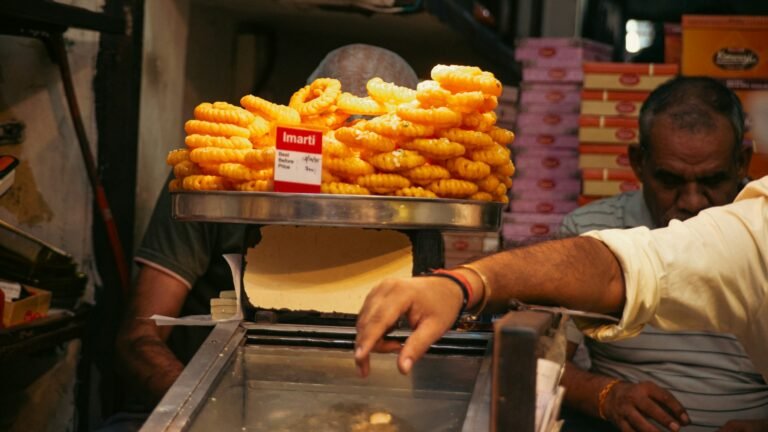
From Dubai chocolate and matcha to tiramisu and Basque cheesecake, five dessert trends reshaping cafés, bakeries and sweet shops across India in 2026.
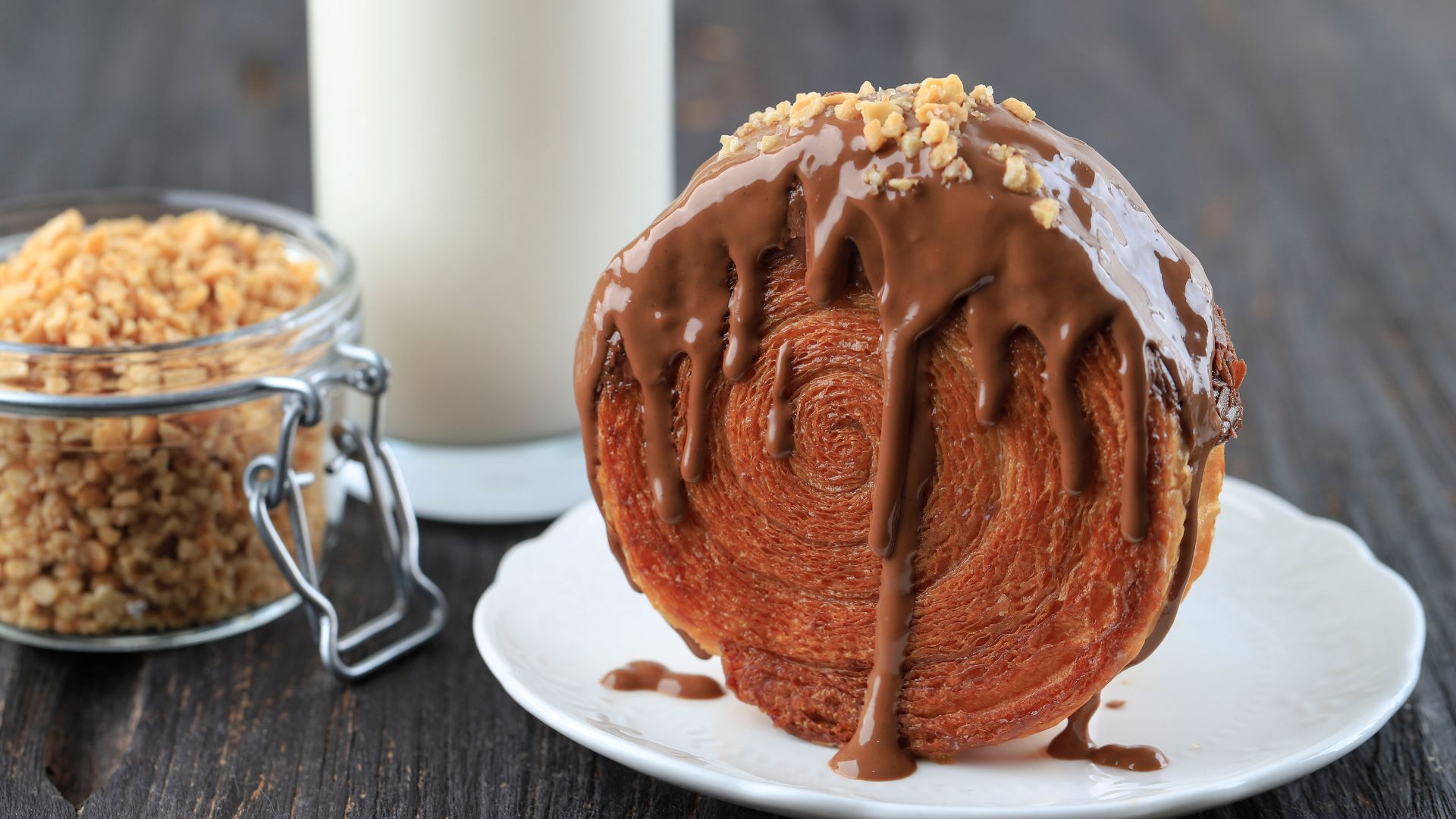
When a dessert trend leaves the feed
A dessert can collect millions of views without becoming part of the way people actually eat. Social-media attention measures visibility; it does not, on its own, establish popularity across India, quality, or staying power.
A more useful way to read dessert trends in India in 2026 is to look for what happens after the first wave of attention. Does an idea move onto current menus? Does it appear in consumer research? Do pastry kitchens adapt it into other formats? Does a flavour begin turning up somewhere other than the original product that made it famous?
Mintel’s March 2026 India research provides one window into that process. Among Indian Gen Z consumers, 22% said they would pay more for matcha-flavoured desserts, while 19% said the same for Middle Eastern-inspired options such as Dubai chocolate and kunafa. Mintel also found that social media plays an important role in dessert discovery among this age group. Those numbers describe Indian Gen Z, not the population as a whole, but they help explain why some globally circulating flavours are finding space in Indian dessert businesses.
Five developments are particularly useful to watch: Dubai chocolate’s pistachio-kunafa combination, matcha moving further into pastry, tiramisu being treated as a flexible format, Basque cheesecake settling into bakery menus, and croissants absorbing flavours from several of those trends at once. The later section on Indian adaptations brings those five threads together; it is synthesis rather than a sixth trend.
Dubai chocolate turns pistachio and kunafa into a wider dessert language
Of the trends in this story, Dubai chocolate has the strongest evidence for being described as viral.
The format is associated with FIX Dessert Chocolatier’s Can’t Get Knafeh of It bar, first sold in Dubai in 2022. Its chocolate shell encloses pistachio cream and kataifi pastry. The Indian Express reported that a December 2023 TikTok video featuring the bar later exceeded 120 million views, after which versions of the idea spread across brands and markets well beyond the UAE.
India now has examples of the combination appearing both in the original chocolate-bar format and in other desserts. Le Damas currently sells kunafa-pistachio milk chocolate in India, alongside a dark-chocolate version. Chocolate & Tonk in Delhi NCR lists a Dubai Chocolate Pudding made with a chocolate base, pistachio cream and knafeh-style crunch. These are businesses describing their own products, so their menu listings establish availability rather than independent evidence of popularity.
Mintel’s consumer research adds a different kind of evidence: 19% of Indian Gen Z respondents said they would pay more for Middle Eastern-inspired desserts such as Dubai chocolate and kunafa. That is not a nationwide popularity figure. It does, however, indicate measurable interest in these flavours within a younger consumer cohort that Mintel identifies as particularly engaged with desserts and social-led discovery.
The next stage of the trend may matter more than another imitation chocolate bar. Pistachio cream, chocolate and crisp kunafa are increasingly being treated as components that can move into puddings, pastries and other dessert structures.
Matcha moves further into desserts
Matcha’s Indian story is broader than pastry. It is appearing in drinks, packaged products and cafés, which makes it important not to interpret every sign of matcha interest as evidence specifically about desserts.
There is still a clear dessert signal. Mintel found that 22% of Indian Gen Z consumers surveyed were willing to pay more for matcha-flavoured desserts. The same research grouped matcha with flavours gaining visibility through social-led food discovery, while noting that it remains relatively new to many Indian consumers.
The ingredient itself is also developing a more direct Indian supply story. In July 2026, The Indian Express reported that Chota Tingrai Tea Estate in Assam sold a five-kilogram batch described as the first Indian-manufactured matcha at the Guwahati Tea Auction Centre. The report linked the experiment to growing Indian demand for matcha in cafés, beverages and desserts.
On current menus, the ingredient is moving beyond the matcha latte. Sugarama’s current Swiggy menu in Gurugram lists a Mango Matcha Tres Leches Cake, made with sponge soaked in matcha-infused milk and paired with mango.
That does not establish matcha as a dominant national dessert flavour. It shows something narrower and more useful: Indian pastry businesses are beginning to combine matcha with formats and ingredients that already have their own audience, rather than treating it only as a specialist tea.
Tiramisu becomes a format rather than one fixed dessert
Tiramisu has been familiar in Indian restaurant and bakery menus for years. Its relevance in 2026 comes less from novelty than from how freely pastry kitchens are now adapting its structure.
The Times of India reported in August on a wider tiramisu revival, pointing to cafés, event dessert carts and versions built around flavours including pistachio, matcha and mango. That coverage describes a broader pattern rather than proving uniform demand across the country, but current menus show the format being reworked in specific ways.
Bombay Sweet Shop currently lists a Coffee Rasgulla Tiramisu. According to the shop’s product description, coffee-soaked rasgullas are layered with mascarpone cream, almond brittle and cocoa. Instead of simply adding an Indian flavour to a conventional tiramisu, the dessert changes one of its basic structural elements by putting rasgulla where a sponge or biscuit component would ordinarily sit.
Conçu’s current menu takes another route. Its Filter Coffee Tiramisu Dessert Globe uses filter-coffee-infused sponge layered with mascarpone cream.
Neither example means that tiramisu has suddenly become universal. They show why it is proving so adaptable: coffee, mascarpone and layered construction create a recognisable framework that can accommodate local ingredients and references without becoming an entirely different dessert.
Basque cheesecake settles into the bakery case
Basque cheesecake needs a different kind of framing.
There is not enough evidence here to call it one of India’s most viral desserts in 2026. What current menus do support is its position as an established contemporary bakery format.
Conçu currently carries both Burnt Basque Cheesecake and Chocolate Basque Cheesecake, including slices and larger cakes. Bengaluru’s La Couronne lists a San Sebastian Basque Burnt Cheesecake alongside croissants and other desserts.
That kind of menu presence is different from a social-media spike. It suggests a format that has become familiar enough for specialist bakeries to offer variations rather than present it as an unfamiliar novelty.
Dubai chocolate and Basque cheesecake therefore occupy almost opposite positions in this story. One arrived through an unusually visible viral moment. The other illustrates how an internationally recognisable pastry style can gradually become part of the working vocabulary of Indian bakeries.
Croissants absorb other dessert trends
Croissants offer another reason to be careful with trend statistics.
Data shared by ITC Sunfeast Baked Creations and Swiggy, and reported by ETRetail in January 2026, said more than 1.5 million croissants were ordered across key Indian metros during the previous year, with orders rising nearly 20% year on year. But the same data said around 56% of those orders were savoury, with the share above 60% in Mumbai and Pune.
Those numbers are therefore evidence of croissant-category growth on one delivery platform, not proof of a national dessert-croissant boom.
The dessert story lies instead in what bakeries are putting inside the format.
La Couronne’s current Bengaluru menu lists a Dubai Chocolate Croissant with pistachio cream and chocolate ganache, as well as a Tiramisu Croissant using espresso and mascarpone. The same menu also contains pistachio kunafa and Basque cheesecake.
In other words, the croissant is functioning as a carrier for several ideas circulating elsewhere in dessert culture. That does not make every hybrid a lasting trend. It does show how quickly a familiar bakery format can absorb a newly fashionable flavour.
Indian adaptations tell us more than direct copies
This section brings the five trends together rather than adding another one.
Bombay Sweet Shop puts rasgulla into tiramisu. Conçu brings Indian filter coffee into the same framework. Sugarama combines matcha with mango and tres leches. La Couronne moves both Dubai chocolate and tiramisu into croissants.
Those products should not be read as proof that the underlying trends will last. A current menu is evidence of a current menu, nothing more.
But adaptation does mark a meaningful shift. A flavour or dessert idea has travelled far enough for another kitchen to alter its structure, combine it with a local ingredient, or move it into a different pastry format.
That process matters in India because new café and bakery trends arrive alongside existing traditions rather than into an empty market. Mithai, regional coffee cultures, fruit-led sweets, European-style patisserie and contemporary café formats can all intersect with the same global idea.
The result is often more informative than another faithful copy of whatever first appeared on a social feed.
What makes a dessert trend stick?
No single number can answer that question.
A social-media view count measures attention. Search activity measures curiosity. Delivery-platform orders show behaviour within one channel. Consumer research applies to the population that was actually surveyed. A bakery menu tells us what one business has chosen to sell at a particular moment.
The useful picture appears only when several kinds of evidence begin to overlap.
Dubai chocolate has unusually strong evidence of virality, international imitation and interest among Indian Gen Z consumers. Matcha has measurable Gen Z interest and is moving into Indian-produced tea and dessert menus. Tiramisu is being repeatedly reformatted and localised. Basque cheesecake looks less like a passing viral event and more like a settled bakery format. Croissants, meanwhile, provide a familiar structure into which several of these flavours can be inserted.
None of that makes these the five “best” desserts in India, or establishes them as the country’s five most popular.
What they reveal instead is how dessert trends move in 2026: from feeds into menus, from imported formats into Indian adaptations, and from sudden visibility into the much harder test of whether a flavour still has somewhere to go after the first burst of attention has passed.