FSSAI’s 2026 festive drive is targeting sweets, milk products, edible oils, savouries and other high-demand foods. Here’s what inspectors are checking—and what shoppers can realistically do.
FSSAI’s Festive Food Safety Drive 2026: What Shoppers Should Know
A box of mithai is an easy festive purchase. Knowing how it was made, stored and transported is harder. FSSAI’s festive food safety drive 2026 puts that supply chain under closer scrutiny—but a national inspection drive is not a safety certificate for every shop or sweet.
What the September 2026 direction covers
In its 29 September letter to state and Union Territory food-safety commissioners and regional directors, FSSAI asks for stronger surveillance during Navratri and Diwali. It flags milk products, sweets, savouries, edible oils, beverages and ghee; regional priorities may include kuttu and singhada flour.
Officials are asked to inspect premises and collect samples, concentrating on identified hot spots. Where available, Food Safety on Wheels units should support testing and awareness in prominent markets or locations identified through intelligence. Inspection, sampling and outcome records must be updated on FoSCoS or FoSCoRIS in real time.
The letter sets out enforcement priorities. It does not announce findings from completed inspections, name guilty businesses or establish that all festive food is adulterated. Nor does it create a new consumer certification mark.
What shoppers can check at the counter
Use the drive as a reminder to ask practical questions, rather than as a reason to panic. FSSAI’s guidance on traditional milk products explains that shelf life depends on ingredients and that milk-based sweets can be especially perishable.
- Identify the seller. Look for the business name and displayed FSSAI licence or registration details. A licence identifies a regulated business; it is not a laboratory result for your purchase.
- Check the display. Prefer sweets protected from dust and handling. Ask whether the particular sweet needs chilled storage.
- Ask about shelf life. Read the counter’s date information and ask how the food should be stored after purchase. Do not assume every item in a mixed box has the same keeping time.
- Plan the journey home. Choose foods and quantities that suit the time before serving, especially when buying perishable sweets as gifts.
- Keep the receipt. It connects a concern to the seller, purchase date and product.
These are useful buying decisions, not a way to certify purity. A clean-looking counter cannot reveal everything about ingredients, temperature control or a supplier’s manufacturing practices.
A mixed mithai box needs more than one storage question
The ingredients matter as much as the occasion. FSSAI’s traditional-milk-products guidance distinguishes milk and Bengali sweets, such as rasmalai and sandesh, from other sweets with different keeping requirements. Ask the seller about each variety before combining them in a gift box. A chilled dessert and a dry sweet should not automatically be given the same storage plan.
Packaged foods: read beyond the front of the box
Before paying, inspect the packaging and read the product’s date marking, ingredient information and storage directions. For an opened pack, check whether separate storage instructions apply. FSSAI’s labelling and display reference links date validity to stated storage conditions; the date should not be read in isolation.
Do not treat an attractive gift box, a familiar brand or a festive discount as evidence of safe storage. If the pack is damaged or the seller cannot explain an unclear date, choose another product rather than trying to resolve the uncertainty by tasting it.
Why home tests cannot replace official sampling
Sampling and analysis answer questions that appearance alone cannot. A shopper’s observation is a reason to ask or report, not proof that a product violates a standard.
For a narrower example, our guide to FSSAI’s ghee purity tests explains the limits of household checks. Our silver-varq explainer separately covers the manufacturing requirements for edible silver leaf. Neither ingredient issue should be confused with a sweet’s freshness.
How to raise a food-safety concern
FSSAI’s Food Safety Connect service lets consumers report concerns and check licence authenticity. Its complaint FAQ recommends attaching relevant evidence, including product photographs and bills.
- Record the product, seller and purchase date, along with any batch or licence details you have.
- Photograph the packaging, date information or visible problem without altering it.
- Submit a factual account through the official service and retain the complaint reference to track progress.
Describe what you observed. Avoid claiming a particular adulterant is present unless testing has established it. The festive drive increases official scrutiny; the consumer’s most useful contribution is clear information.
Details confirmed as of 12 October 2026. This article explains FSSAI’s published direction and consumer checks; it does not certify any individual product or shop.
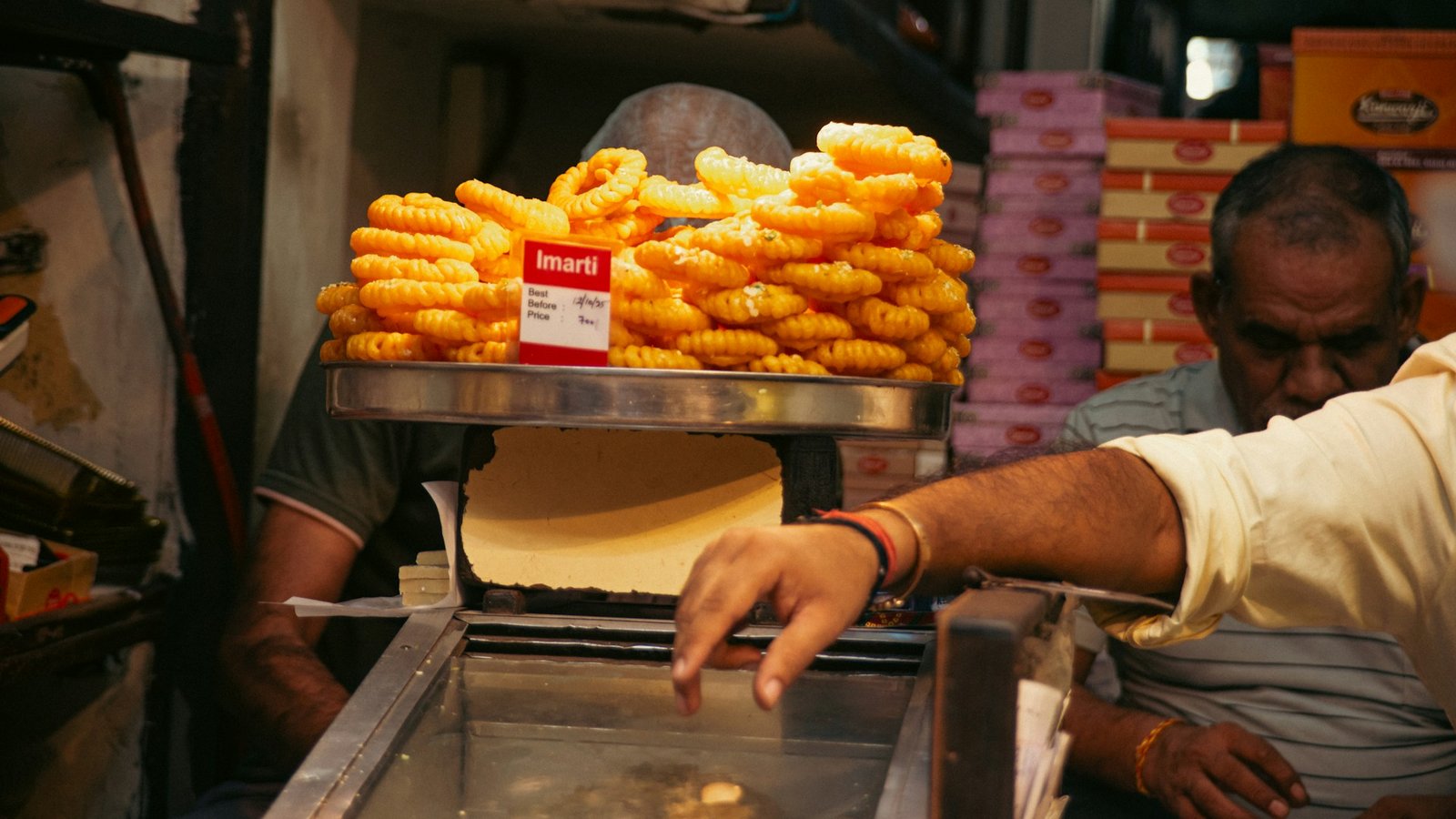
Featured image: Photo by Zoshua Colah / Unsplash, used under the Unsplash License. Illustrative sweet-shop scene; the pictured business is not identified as subject to enforcement or non-compliant.