Lower rents and faster expected breakeven are drawing restaurant brands beyond metros, but staffing, supply chains and format choices make Tier-2 expansion a different operating problem.
Why Restaurant Brands Are Expanding Into India’s Tier-2 Cities
For years, the default expansion map for a national restaurant brand ran through Delhi, Mumbai, Bengaluru and a handful of other large metros. That map is changing.
The strongest recent industry evidence comes from Grant Thornton Bharat’s Course Beyond Metros: Recipe for Growth, developed with the National Restaurant Association of India (NRAI). The 2025 study drew on responses from more than 160 restaurant operators across 50-plus cities, covering QSRs, cafés, casual and fine dining, cloud kitchens and food courts, alongside interviews with national and regional operators.
Its headline number is striking: 94% of surveyed operators said they planned to expand within Tier-II cities or into new Tier-II and Tier-III markets. But the more interesting story is not simply that brands want more stores. It is why the economics can look better outside metros — and why the operating model often has to change once a brand gets there.
Quick answer: Lower rents and faster expected payback make smaller-city expansion attractive, but the saving on real estate can be offset by harder staffing, thinner supplier networks, limited prime sites and the need to adapt format, pricing and logistics. Tier-2 growth is less a copy-paste of metro expansion than a different operating problem.
Lower rent changes the restaurant equation
Restaurant economics are unusually sensitive to fixed costs. Rent is one of the most visible of them, and this is where Tier-II markets can offer a meaningful advantage.
Grant Thornton Bharat’s analysis says commercial leases in prime metro zones can exceed ₹1,800 per sq ft, while Tier-II markets can be available at roughly one-tenth of that level. The report’s point is not that every smaller-city site is cheap. It is that a materially lower occupancy cost can give an operator more room to test a format, take a larger space or absorb a slower opening period without carrying the same metro-level rental burden.
That can alter several decisions at once: how much capital goes into interiors, how large the dining room can be, whether a cloud-kitchen component makes sense and what sales level a unit needs before it becomes viable.
But city averages are not the whole story. The same Grant Thornton study warns that prime locations inside Tier-II cities remain scarce. A lower-cost city can still contain expensive micro-markets where the best mall, high street or neighbourhood has concentrated demand and limited space.
That is why the useful comparison is not “Mumbai rent versus Lucknow rent.” It is whether a specific catchment can support the brand at a rent-to-sales ratio that works.
Breakeven looks faster — but the number is an expectation
In the joint Grant Thornton Bharat–NRAI survey, nearly 78% of respondents expected to reach breakeven in Tier-II and Tier-III markets within two years. The finding was highlighted in Grant Thornton Bharat’s official release on the study.
That is useful evidence of operator confidence, but it should be read correctly. It is a survey of what operators expect, not an audited result showing that 78% of new restaurants actually break even within two years.
Lower rent can shorten the payback period because the outlet has a smaller fixed-cost burden. Compact formats can lower the capital at risk as well. But food costs, payroll, discounting, delivery commissions, fit-out spending and opening-month demand still decide whether the unit works.
The financial attraction of Tier-2 expansion is therefore not “cheap rent equals easy profit.” It is that the fixed-cost base can create a more forgiving starting point — if the rest of the operation is built for the market.
The real-estate advantage does not eliminate site risk
Restaurant expansion is usually won or lost at the level of the micro-market, not the city label.
Grant Thornton Bharat points to places such as Gomti Nagar in Lucknow and Indore’s Super Corridor as examples of smaller-city demand pockets shaped by offices, infrastructure and connectivity. These are not interchangeable with every neighbourhood in the same city.
A national brand entering a new market has to estimate footfall, delivery demand, parking, office traffic, family dining patterns, competition and the local spending ceiling. A premium concept may need one catchment; a value-led QSR may need another.
This is also why India’s changing dining habits cannot be separated from expansion economics. Our earlier piece on how dining out in India is changing looks at the discovery, booking and service layer. For operators, those consumer behaviours matter most when they can be translated into the right site and format.
Staffing can erase part of the cost advantage
Real estate may be cheaper. Skilled labour is not automatically easier.
Grant Thornton Bharat reports that 61% of surveyed operators faced shortages in both kitchen and service staff in Tier-II markets. The report links the problem to migration toward larger cities, limited local training infrastructure and high attrition among employees brought in from Tier-I markets.
That changes the operating model in practical ways. A restaurant may need to spend more on training, housing or relocation support. It may need simpler service routines, more standardised kitchen processes or a larger local hiring pipeline before adding the next outlet.
For brands that depend on highly trained bar teams, specialist chefs or tightly choreographed fine-dining service, the staffing constraint can be more significant than the rent saving.
The economics of a smaller city therefore cannot be judged from the lease alone. A low-rent site with unstable staffing can still be expensive to operate.
Supply chains become a scaling problem, not just a sourcing problem
A restaurant can adapt its menu to local demand more easily than it can improvise food safety, ingredient consistency or cold-chain reliability.
The Grant Thornton–NRAI study flags fragmented supply chains, inconsistent cold-chain infrastructure and last-mile logistics as recurring constraints in Tier-II and Tier-III expansion. The consequence is operational rather than abstract: unreliable sourcing can increase wastage, raise procurement costs and make it harder to reproduce the same product across cities.
This matters most for brands built around ingredients that are difficult to source locally at consistent specifications. Expanding one restaurant is possible with manual workarounds; expanding ten can expose every weak link in procurement.
The report’s recommendation is therefore closer to network design than simple local buying: build supplier relationships, use cluster-based expansion and create systems that can support several nearby markets rather than scattering isolated outlets across the country.
That logic is already visible in the wider food-service industry. In its 2024-25 annual report, Devyani International describes calibrated store expansion alongside operating models designed around stronger payback, while continuing to scale brands such as KFC, Pizza Hut and Costa Coffee across a broad city network.
Formats are getting smaller, more flexible and more delivery-aware
A metro flagship is not always the right template for a new city.
Grant Thornton Bharat recommends balancing formats: QSRs for scalable turnover, casual dining where experience matters and cloud-kitchen or hybrid models where delivery can support demand. Its analysis also highlights compact, cost-efficient formats as a way to control capital.
Devyani International provides a concrete operator example. Its 2024-25 annual report says the company has focused strategically on small-format stores, describing them as capital-efficient with stronger payback potential. It also says its growth strategy is calibrated around healthy paybacks in core brands.
That should not be read as a universal rule that Tier-2 stores must be small. It shows why format flexibility matters: if the kitchen can produce the same core menu from a lower-capex footprint, the brand may not need to recreate a large metro dining room in every market.
For cafés, the same question appears in another form. Our profile of India’s expanding homegrown café chains shows how operators are already using very different store sizes and service models — from destination cafés to compact convenience formats.
Weekend demand changes staffing and inventory
Smaller-city demand can also be less evenly distributed through the week.
Grant Thornton Bharat says some Tier-II operators see up to 60% of revenue concentrated on weekends. That is not a national average for every restaurant. It is a finding from the operator research that helps explain why flexible staffing and modular operations matter.
A weekend-heavy business has to prepare for a different rhythm: more labour and inventory during peak periods, tighter control over perishables during quieter weekdays and marketing that builds occasions rather than assuming a steady office-lunch trade.
For casual dining and family restaurants, that can make the unit economics attractive if the weekend peaks are strong enough. It can also make forecasting errors more painful.
Price and menu adaptation matter as much as brand recognition
The Grant Thornton–NRAI research describes Tier-II consumers as increasingly brand-aware but still price-sensitive. That combination is important.
A national name can bring trust, familiarity and aspirational value, but it does not give the operator unlimited pricing power. The outlet still has to fit local spending patterns, portion expectations, eating occasions and competition.
That does not necessarily mean creating a completely different menu. It can mean adjusting entry price points, store size, day-part focus, delivery mix or the ratio between familiar products and more premium ones.
Devyani’s annual report offers a QSR example of this broader operating logic: the company highlights value-led menu items and promotional offers alongside store-format efficiency. The lesson is not that every brand should discount. It is that expansion works when format economics and customer value are designed together.
Why brands are expanding in clusters instead of planting isolated flags
A single outlet in a distant city can be expensive to support. A group of outlets across connected markets can share more of the operating system behind them.
Grant Thornton Bharat explicitly recommends cluster-based expansion: targeting groups of nearby cities so logistics, management, marketing and vendor relationships can be spread across several units.
This is one of the most important differences between headline growth and sustainable growth. Opening a store creates presence. Building a cluster creates an operating network.
The same logic affects delivery. Food-delivery platforms have made restaurant discovery and ordering easier beyond metros, but delivery does not remove the need for local density, kitchen discipline or reliable last-mile operations. Our explainer on how food delivery apps changed restaurants in India looks at that shift from the restaurant side.
What Tier-2 expansion does not mean
“Rents are lower, so margins must be higher”
Not necessarily. Staffing, supply-chain inefficiency, fit-out costs, discounts and weak site selection can absorb the rent advantage.
“A successful metro format will work unchanged”
Not reliably. The Grant Thornton–NRAI study repeatedly stresses format, pricing and supply-chain adaptation rather than copying the Tier-I playbook.
“94% of restaurants are expanding”
No. The 94% figure refers to expansion plans reported by operators in the study sample. It is not a census of every restaurant business in India.
“78% break even within two years”
No. Nearly 78% of surveyed operators said they expected breakeven within two years. The survey does not establish that this outcome occurred for 78% of openings.
The growth story is really about unit economics
The most useful way to understand restaurant growth in India’s Tier-2 cities is not as a simple migration from metros to smaller markets.
Brands are being pulled by a combination of lower occupancy costs, expanding consumer demand and the possibility of faster payback. At the same time, they are being forced to solve harder questions around people, procurement, logistics, site selection and format design.
That is why the strongest expansion strategy is rarely “open the same restaurant everywhere.” It is closer to this: keep the parts of the brand that customers recognise, then redesign the cost structure and operating system for the city in front of you.
Bottom line: Tier-2 cities can offer better restaurant economics, but lower rent is only the first line of the equation. The brands that scale well still need the right micro-market, the right footprint, trained local teams and a supply chain that can reproduce the product without losing control.
Details confirmed as of 6 October 2026. Restaurant formats, expansion plans and operating conditions can change; check current company disclosures and local market conditions for the latest information.
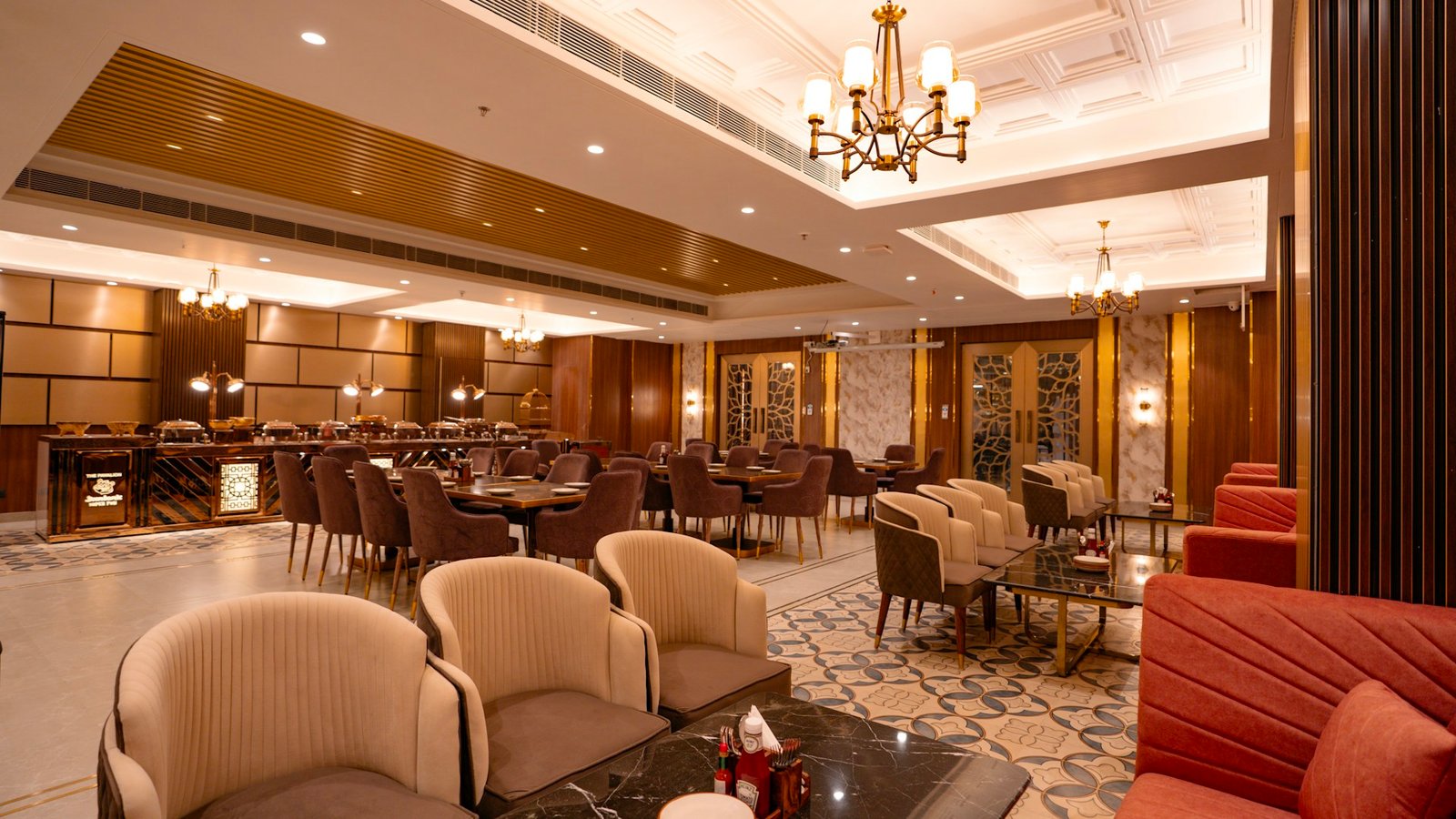
Featured image: Photo by Mustafa Fatemi / Unsplash. Modern restaurant interior shown illustratively; this is not a named Tier-2 venue.